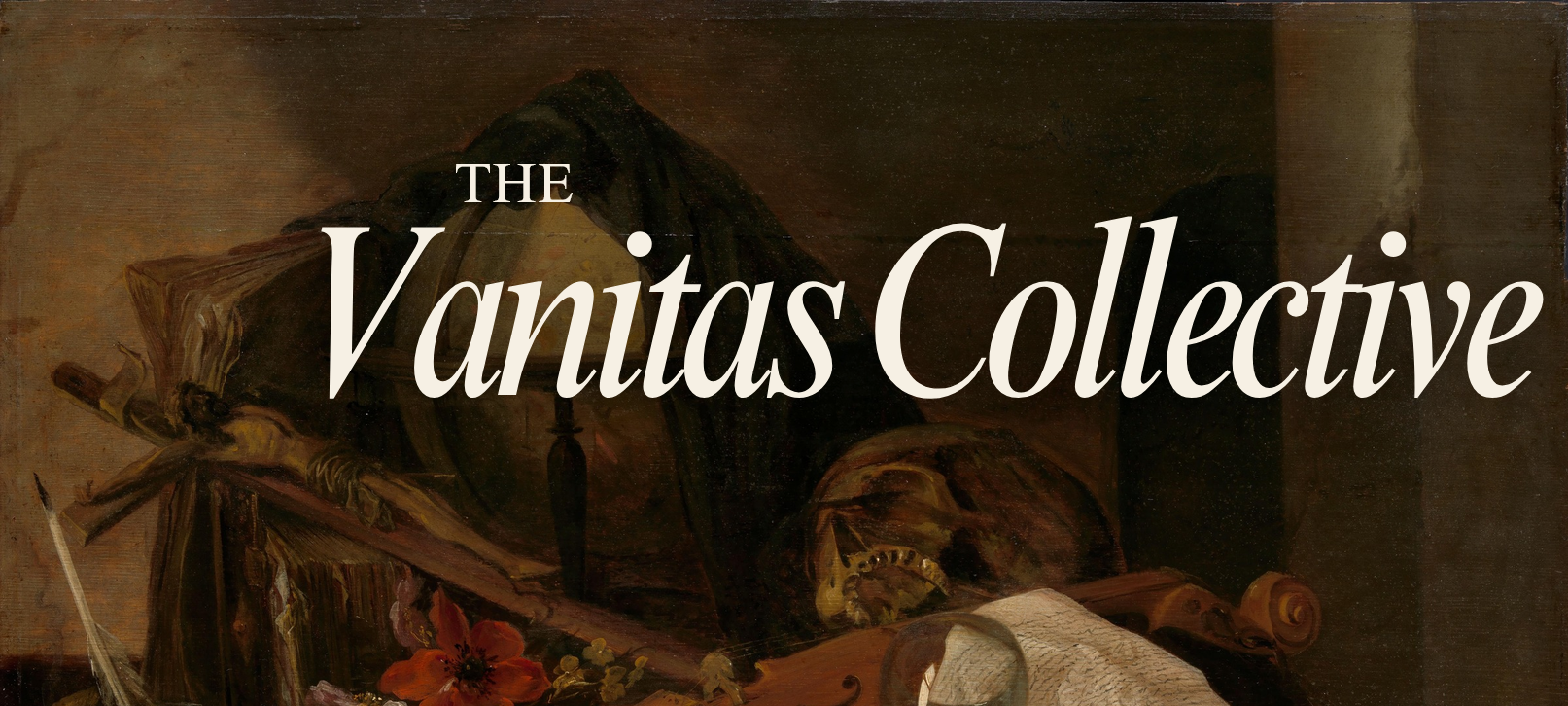
About the Exhibit
The items in this collection come from museums around the world, but each originated in the area that is now known as the Netherlands.
The items in this exhibit can be found in the Collection. We encourage you to explore freely, notice themes, and appreciate each artist's skill. When looking at the individual pieces, guiding questions have been provided to draw your attention to certain facets, but these are by no means the most important parts of the works. After admiring the piece and reading the description, you are invited to develop your own interpretation. There are no right or wrong answers--art means different things to different people, and everyone brings a unique perspective to the table!
Each piece in this collection represents a masterful marriage of art, technology, religion, and culture. This exhibit strives to provide additional context about the symbols found in vanitas pieces as well as the state of Dutch culture at the time. We invite you to reflect on your own perceptions of the European Renaissance and immerse yourself in the world of Vanitas.
About the Research
This research is the product of a long and convoluted academic journey. As an undergraduate student studying cell and molecular biology, my interest in history extended only as far as genetics, which, I claimed at the time, was as close as you can get to history in a science lab. Two weeks into my first history class, taken only because it fulfilled a liberal arts requirement, I wrote an essay describing my relationship with history in which I stated that I would likely never take another history class again. That course, focused on the Renaissance and Reformation, went on to change the course of my life.
A lecture on Hans Holbein’s The Ambassadors (1533) piqued my interest in the relationship between religion and science in Early Modern Europe. As a student of science, I studied figures such as Galileo (1564-1642) and Charles Darwin (1809-1882) who faced opposition from the Catholic Church, leading me to believe that the animosity between intellectual progress and Christianity as a whole was inherent.
Even among historians, this sentiment retains a strong presence. Charles Freeman, a historian of European thought, claims that he “shall be cautious… in assuming that there was an effective relationship between the diverse expressions of Christianity and the many activities that can loosely be grouped together under the umbrella of science. The two disciplines had such different aims that little meaningful can be said about the relationship.”[1] Continued belief in that sentiment, however, does not change the fact that it is objectively false, especially in the seventeenth century.
As Goldstein argues, “the roots of that historic conflict were not as deep as it may seem. What may look in retrospect like an irreconcilable dichotomy between ‘science’ and ‘faith’ (or ‘reason’ and ‘religion’) began as a mere conflict between two ways of understanding the religious universe.”[2] Faith has always been a way for humans to understand the world around them. Belief in a higher power allows the unexplainable to be explained, providing answers for questions that humans did not have the skill, knowledge, or resources to answer themselves. “Medieval people felt surrounded by puzzles, yet because God was there they were willing to acknowledge that causes are hidden, that man cannot know why all things are as they are, ‘they are as God pleases.’”[3] Science, however, is man’s attempt to approach those questions from an alternate angle, and “belief in God never prevented people from seeking to understand the world around them.”[4]
The relevance of this ongoing debate is evident in today’s political climate; Christian arguments against topics such as abortion, transgender rights, and science-focused educational curriculum are all underpinned by a perceived age-old animosity between reason and faith. “History is made productive and meaningful if, despite its difference from the present, it influences how people see their world.”[5] Changing the historical memory of Christianity’s relationship with science, technology, and innovation may help to bridge some of the modern-day divides that have become embedded in Western society. This thesis will serve as my contribution to the continued effort to map the intricate and complex relationship between science and religion throughout history.
[1] Charles Freeman, The Reopening of the Western Mind: The Resurgence of Intellectual Life from the End of Antiquity to the Dawn of the Enlightenment (New York: Alfred A. Knopf, 2023), 15.
[2] Thomas Goldstein, Dawn of Modern Science: From the Ancient Greeks to the Renaissance (New York: Da Capo Press, 1995), 69-70.
[3] Barbara Tuchman, A Distant Mirror: The Calamitous 14th Century (New York: Ballantine Books, 1978), 59.
[4] Seb Falk, The Light Ages: The Surprising Story of Medieval Science (New York: W.W. Norton & Company, 2020), 5.
[5] Alison Landsberg, Engaging the Past: Mass Culture and the Production of Historical Knowledge (New York: Columbia University Press, 2015), 30.