
The Sixties Down South
The Radical South: North Carolina’s Underground Press
Across North Carolina in the late 1960s and early 1970s, underground newspapers emerged as vital platforms for dissent, creativity, and community organizing. Produced by students, activists, soldiers, and local writers, these publications challenged political norms and amplified voices often excluded from mainstream media. Together, they reveal a dynamic landscape of protest and cultural change unfolding across the state.
These underground publications illuminate a vibrant, often overlooked chapter of North Carolina’s history—one in which young people, activists, and ordinary citizens used the power of print to question authority, build community, and reshape the cultural landscape of the South.
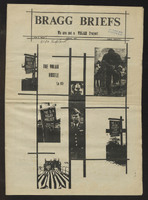
Bragg Briefs
Vol. 4, No. 6
August 1971
At Fort Bragg, active‑duty soldiers and veterans created Bragg Briefs, a rare underground paper produced from within the military community itself. The publication exposed the realities many GIs faced—drug use, frustration with leadership, and the emotional and financial pressures placed on troops. By giving voice to dissenting service members, Bragg Briefs insisted that the lived experiences of soldiers be part of the national conversation about the Vietnam War.
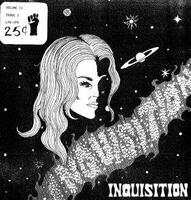
Inquisition Magazine
Vol. 11, Issue 3
Working out of a backyard shed between 1968 and 1969, East Mecklenburg High School students produced a magazine, Inquisition, that challenged the city’s political and cultural conservatism. Their work drew the attention of local officials and sparked Inquisition v. City of Charlotte, the first case in the nation in which city zoning laws were used to challenge the free press, making the publication a landmark in First Amendment history.
Its final issue of 1969 featured an interview with Jimi Hendrix, recorded after his Charlotte performance. That a group of high-school students captured a late-career conversation with one of the era’s most influential musicians underscores the publication’s ambition and reach—and reveals how deeply Charlotte’s young people were connected to the cultural transformations sweeping the country.
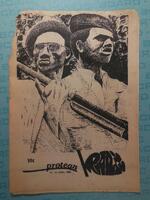
Protean Radish
April 1969
In Chapel Hill, The Protean Radish—often simply called The Radish—captured the energy of a growing activist community. Published from 1969 into the early 1970s, the paper chronicled student organizing at UNC and Duke, antiwar mobilizations, and the shifting political culture of the era. Its pages offered an alternative forum for young people questioning authority and imagining new forms of social engagement.
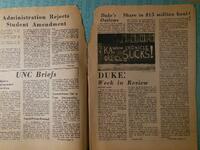
UNC Briefs & DUKE:
Week in Review
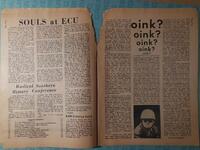
SOULS at ECU
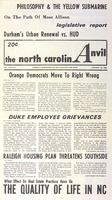
The Anvil
Vol. 2, Issue 87
January 18, 1969
The Anvil offered a broader regional perspective. Published from 1967 to 1983 in Durham, it covered local politics, social movements, and cultural events, becoming a vital forum for progressive voices across the South. Founded by Bob Brown and Leon Rooke, the paper connected North Carolina readers to national debates while grounding its reporting in the everyday struggles and aspirations of the community.
Peace in the South: North Carolina’s Antiwar Movement
In the late 1960s, students, veterans, and community organizers in North Carolina joined a growing national movement demanding an end to the Vietnam War. These materials reveal a statewide network of antiwar activism. Through marches, music, dialogue, and direct outreach, North Carolinians helped shape the broader national movement for peace.
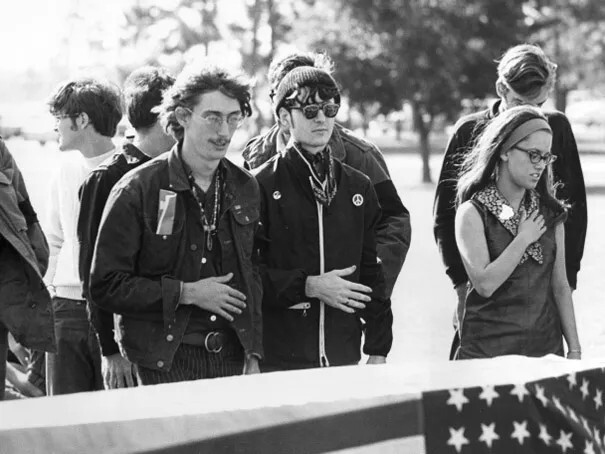
National Moratorium Day UNCW
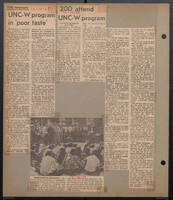
Wilmington Star-News,
Oct. 16, 1969
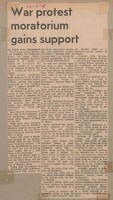
Wilmington Star-News,
Oct. 11, 1969
At UNC‑Wilmington, students participated in the National Moratorium to End the War in Vietnam on October 15, 1969. Their campus demonstration linked Wilmington to a nationwide day of reflection and protest, as communities across the country paused to confront the human and political costs of the conflict. Newspaper coverage preserved in scrapbooks reports on both the events of the day and the preparations leading up to it, revealing how students organized teach‑ins, vigils, and marches to express their opposition.
On the same day demonstrations unfolded across the state, students at Saint Augustine’s University marched from their Raleigh campus to the North Carolina Capitol in support of the national moratorium. Joined by fellow students from Shaw University and several local high schools, they carried signs, chanted, and issued a formal position statement condemning the war and calling for meaningful change at home and abroad. Their march linked the historically Black colleges of Raleigh to a broader statewide movement, showing how young people—across campuses, communities, and generations—claimed public space to make their voices heard.
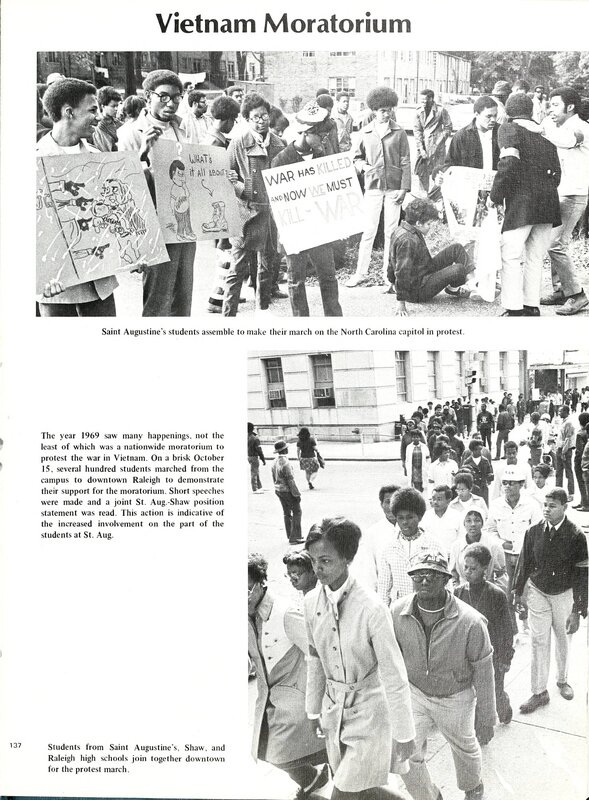
Saint Augustine's University Vietnam Moratorium
October 15, 1969

The News and Observer, Dec. 12, 1969
Other campuses across the state were equally active. Articles from the period describe upcoming antiwar events at East Carolina University and NC State University, including a December 12th “Moratorium Hootenanny” and a coordinated march in Fayetteville the following day.
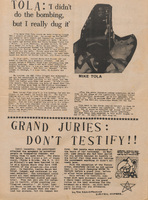
On December 7, 1968, the United Anti-Military Law Front (UAMLF) organized a march to defend GIs’ right to free speech. Students, veterans, and community members walked together to a local church for a rally, then traveled to Fayetteville to speak directly with service members stationed near Fort Bragg. Their goal was to build alliances with troops who questioned the war, insisting that soldiers’ experiences and frustrations be part of the public conversation.

Protean Radish, Dec. 9, 1968
Sit-Ins to Social Change: Civil Rights in the Tar Heel State
On February 1, 1960, four North Carolina A&T students launched a nonviolent protest against segregation by sitting at the “whites-only” lunch counter and refusing to leave. Their quiet act of defiance quickly ignited a broad, interracial movement across the South, accelerating the push for civil rights and shaping the cultural shifts that would define the decade.
The Greensboro sit‑ins also marked a turning point in North Carolina’s own struggle with integration. Although the U.S. Supreme Court had ruled school segregation unconstitutional in 1954, progress in the state remained slow and uneven. Many public schools, colleges, and businesses continued to operate under de facto segregation well into the early 1960s. Student‑led actions—first in Greensboro, then in cities like Durham, Raleigh, Charlotte, and Greenville—forced the issue into public view and pressured local officials to act.
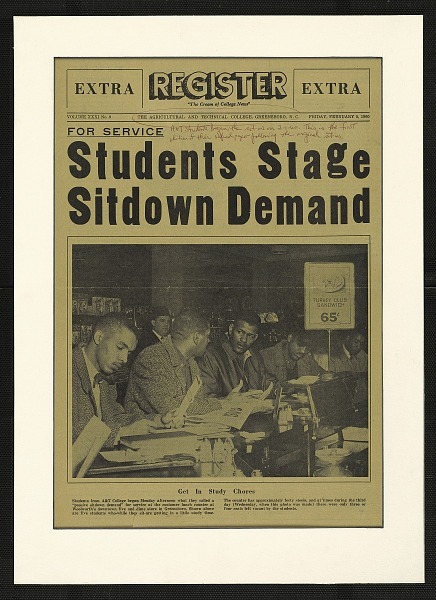
Register, Feb. 5, 1960
The Register’s front page captured the Greensboro students on day five of their “passive sit‑down demand,” a striking image that showed how quickly the protest had grown and how deeply it resonated with young people across the country. The sit‑ins revealed the strength of coordinated, student‑led action and signaled a new phase in the struggle for racial justice.

SCLC Youth Leadership Conference, April 1960
In the wake of Greensboro, the Southern Christian Leadership Conference recognized the need to support and coordinate this emerging wave of youth activism. Student leaders from across the region were invited to Shaw University in Raleigh for a founding conference held April 15–17, 1960. There, they established the Student Non‑Violent Coordinating Committee (SNCC), an organization that would become one of the most influential forces in the civil rights movement. Rooted in the energy of the sit‑ins, SNCC empowered young activists to challenge segregation, expand voter registration, and reshape the political landscape of the South.
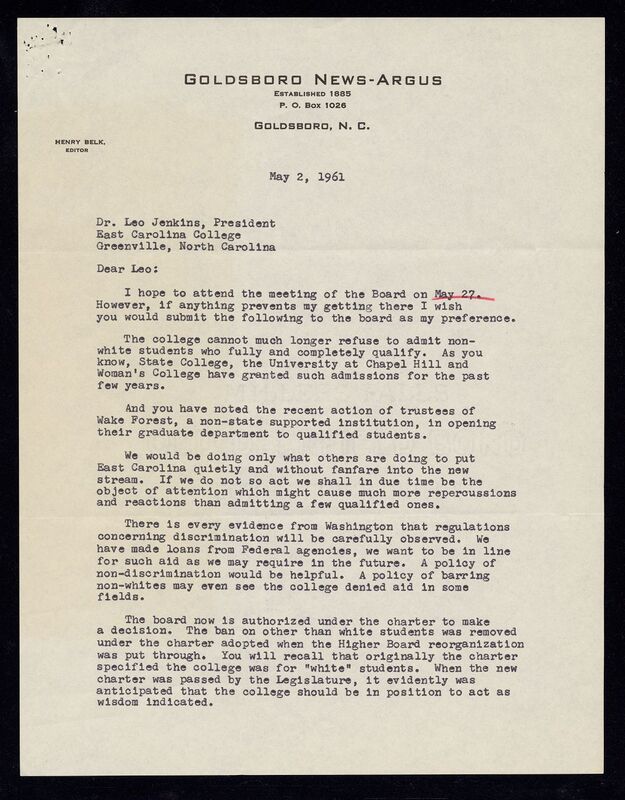
Henry Belk Urges Integration at East Carolina College, 1961
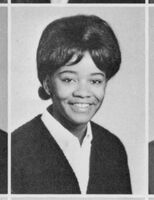
Senior portrait of Laura Marie Leary,
ECC’s first African American
undergraduate graduate, 1966.
In 1961, Trustee Henry Belk—editor of the Goldsboro News‑Argus—urged President Leo Jenkins to begin admitting qualified Black students to East Carolina College. Belk pointed to peer institutions across North Carolina that had already taken steps toward integration and warned that ECC’s continued exclusion of non‑white applicants risked federal scrutiny and the loss of future funding. With the college’s revised charter no longer restricting enrollment by race, he argued that ECC had both the authority and the responsibility to act.
Progress came slowly. In the fall of 1962, East Carolina became the last institution in the UNC system to integrate its undergraduate program when Laura Marie Leary of Vanceboro enrolled. Chosen by President Jenkins, Leary entered the college as its first African American undergraduate student. She was soon joined by other Black students and graduated in 1966 with a BS in Business Administration, marking a milestone in the college’s history.
As more African American students arrived throughout the late 1960s, unresolved racial tensions on campus grew more visible. The decade that had begun with cautious steps toward integration ended with both significant achievements and new challenges, as students pressed the institution to confront inequities that persisted beyond the first admissions.
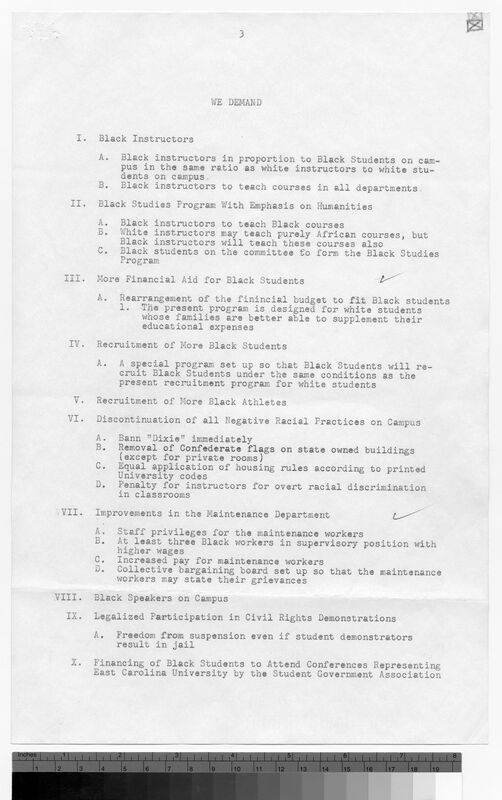
10 Demands from the Society of United Liberal Students (SOULS).
On March 3, 1969, members of the Society of United Liberal Students (SOULS) delivered ten demands to Chancellor Leo Jenkins, calling out “unfair and obsolete racial practices on campus.” They described their proposals as “reasonable and totally fulfillable” and pledged to negotiate—while also committing to take “any and every action necessary” to secure change.
The East Carolinian soon published the full list, sparking campus‑wide debate. Signed by 67 African American students, the demands called for more Black faculty, an African American studies program, expanded financial aid and recruitment, better working conditions for Black staff, an end to practices like playing “Dixie,” protection for civil rights demonstrators, and funding for academic opportunities.
The Ten Demands became a defining moment in the push for equity on campus.
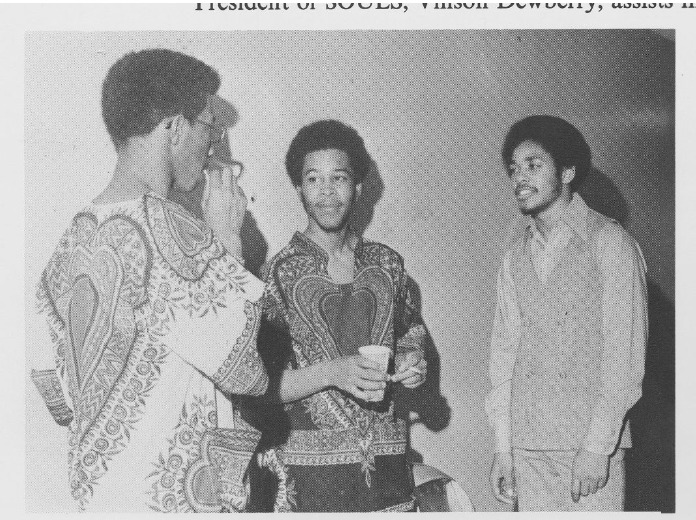
SOULS members at ECU's first Black Week show
A Changing Carolina: Counterculture’s Impact on North Carolina
The 1960s counterculture reshaped communities across North Carolina as young people questioned long‑held norms and embraced new ideas about environmental responsibility, personal freedom, and social change. Together, these perspectives show how the counterculture left a lasting imprint on North Carolina—sparking activism, reshaping student life, and encouraging new conversations about identity, responsibility, and the future.

ECU students participate in first Earth Day
Fountainhead, April 23, 1970
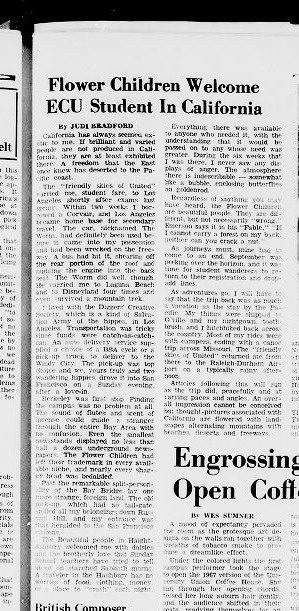
East Carolinian, Sept. 28, 1967
Personal accounts reveal how deeply these ideals resonated.
Beverly Whitley Cratch shares her experience as a member of ECU's counterculture, recalling that she became “a flower child for Earth Day,” joining 20 million Americans—nearly 10% of the U.S. population—on April 22, 1970 to demonstrate support for environmental protection.
In 1967, ECU student Judi Bradford traveled to California during the Summer of Love, where San Francisco's “beautiful people” welcomed her with daisies and a spirit of brotherly love. Immersed in the city's counterculture, she encountered new ideas that broadened her sense of community and creativity—perspectives she carried back to North Carolina.
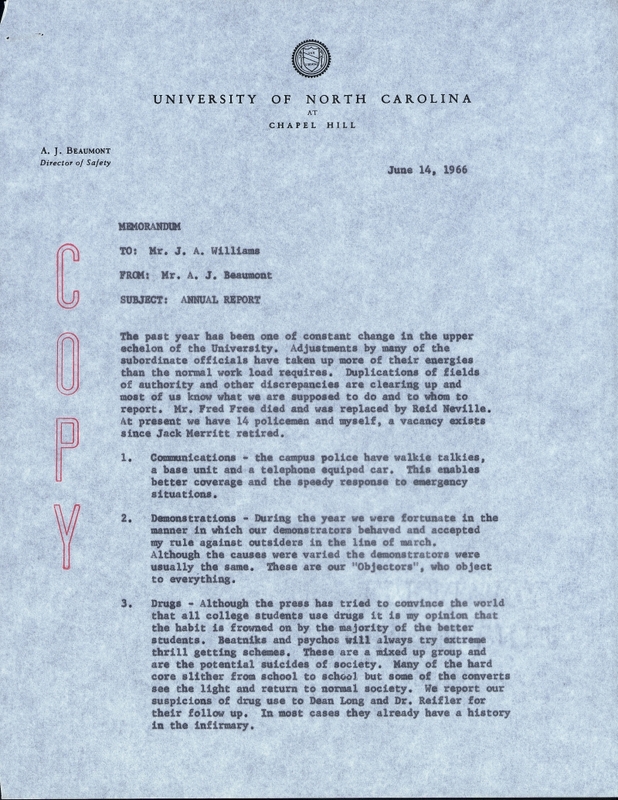
1966 Memorandum from A.J. Beaumont, Director of Safety at UNC Chapel Hill
Campus administrators also felt the shift. A 1966 report from UNC’s Director of Safety documented concerns about protest, drug use, and cultural change, revealing how university officials were trying to make sense of a generation whose values and behaviors no longer aligned with the traditional expectations—pressures that forced universities to adapt to a rapidly changing cultural landscape.
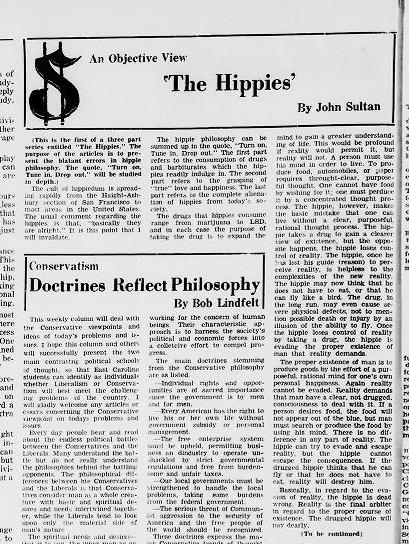
East Carolinian, Sept. 12, 1967

East Carolinian, Sept. 21, 1967
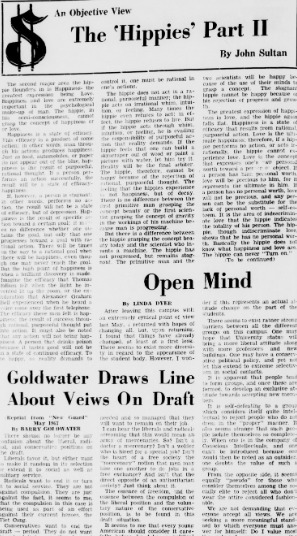
East Carolinian, Sept. 14, 1967
In a series of editorials for the East Carolinian, student writer John Sultan pushed back against the rising counterculture, voicing anxieties shared by many who felt unsettled by the shifting social norms. Claiming an objective stance, his articles carried a distinctly conservative tone as he sets out to challenge what he saw as overly sympathetic views of hippies—"basically they are alright." He examined the movement's philosophy—"turn on, tune in, drop out"—and argued that its ideals masked deeper problems. In Part I, he framed drug use as an escape from reality; in Part II, he argued that hippies misunderstood concepts like happiness and love, mistaking inaction for enlightenment; and in Part III, he contended that their rejection of mainstream expectations left them ill-equipped to face everyday life. Together, his editorials reveal how some students resisted the era's cultural transformations, offering a window into the generational tensions unfolding on campus.