
On the Carolina Road
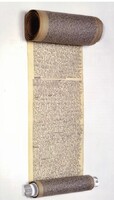
“On the Road”
scroll manuscript
North Carolina occupies a crossroads in Jack Kerouac’s creative world: both a literal waypoint in his travels and a symbolic threshold between lived experience and literary invention. In a modest family home far from the bohemian centers of New York or San Francisco, the Beat movement’s most iconic road story quietly took shape.
To understand why North Carolina mattered, it helps to understand the movement Kerouac helped ignite. The Beat Generation was a loose circle of postwar writers—Kerouac, Allen Ginsberg, William S. Burroughs, and others—who rejected the era’s conformity and championed spontaneity, spiritual searching, and unfiltered personal expression. Their work blended jazz rhythms, cross country wanderlust, and a hunger for authenticity at a time when American culture prized stability and restraint. What began as a small literary community in the 1940s grew into a cultural spark that helped set the stage for the counterculture of the 1960s.
Against that backdrop, eastern North Carolina offered Kerouac something he rarely found elsewhere: stability. He returned between trips, drafts, and personal upheavals, using the quiet rhythms of the region to recover from the intensity of his travels. The landscapes of the Tarheel State—flat tobacco fields, long two lane roads, humid summer nights—filtered into his imagination and later resurfaced in his fiction.
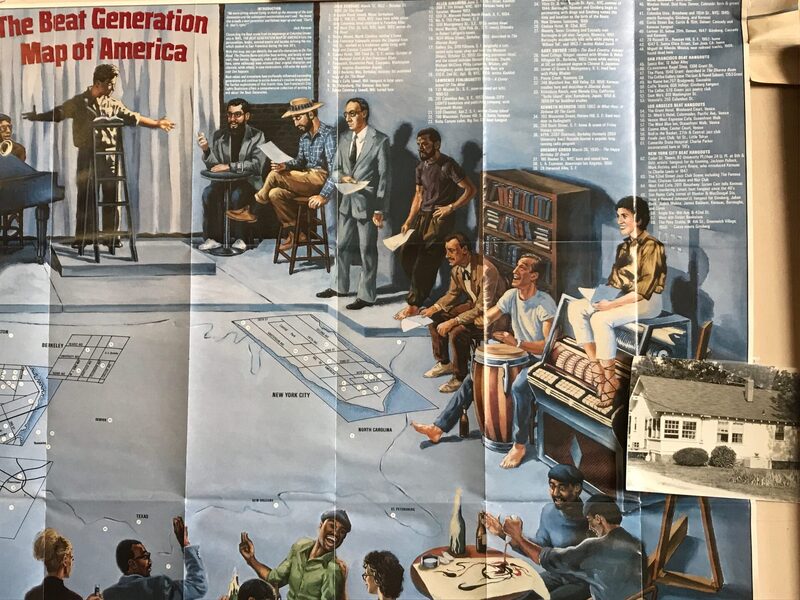
The Beat Generation Map of America, featuring Rocky Mount, NC, highlights the town’s influence on Jack Kerouac and the wider Beat movement.
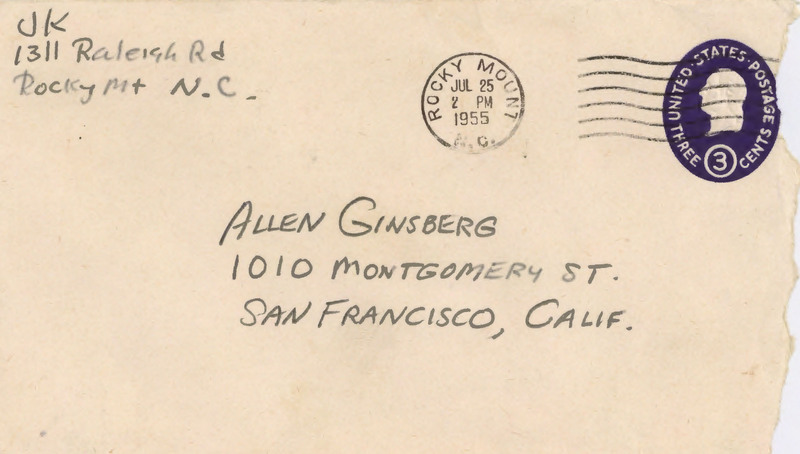
Addressed to Allen Ginsberg in San Francisco, postmarked Rocky Mount, NC, July 25, 1955.

A Rocky Mount letter to Allen Ginsberg in which Kerouac describes plans to travel to San Francisco and his brief work at Paul Blake’s TV repair shop to earn money.
On Christmas Day 1948, Neal Cassady arrived at the Blake home, sparking one of the cross‑country trips that would later appear in On the Road. Though Rocky Mount shaped the real journey, Kerouac ultimately transformed the town into the fictional Testament, Virginia—an editorial choice meant to smooth the geography of his sprawling narrative.
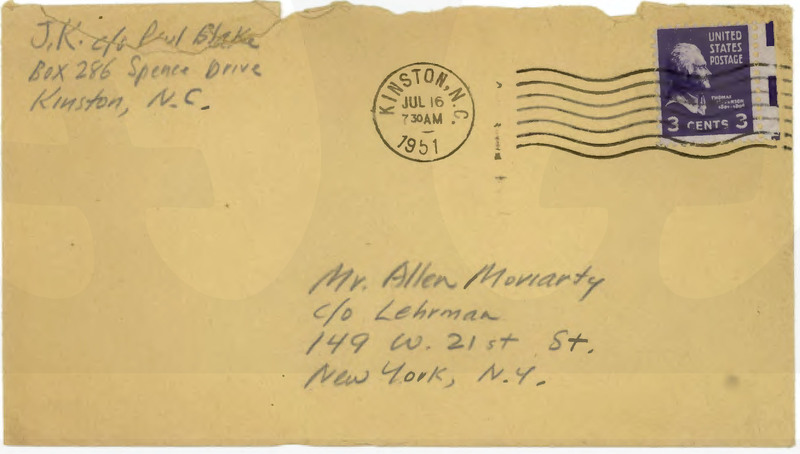
Addressed to Allen Ginsberg as “Moriarty,” a playful reference to Dean Moriarty, the Cassady‑inspired character in On the Road.

A letter to Allen Ginsberg written while Kerouac was staying with family in Kinston, where he describes the steady revisions he was making to On the Road that summer.

Envelope addressed to Jack Kerouac from Neal Cassady during Kerouac’s stay in Kinston, NC, in the summer of 1951.
Kerouac’s North Carolina ties extended beyond Rocky Mount. Between 1947 and 1958, he often stayed with the Blakes in both Rocky Mount and Kinston. During one of these visits in 1951, he received the envelope displayed here—a letter from Neal Cassady, his closest friend and a driving force behind the Beat movement. Their urgent, idea‑filled correspondence sustained Kerouac’s creativity across long distances. That same summer, he was also writing regularly to Allen Ginsberg, sharing drafts and doubts. His July 15, 1951 letter to Ginsberg outlines planned revisions to “Road,” revealing how their inked exchange shaped his evolving sense of craft.