Oral history with Tonda Barker Trivette documenting her family’s role in organizing the 1970 Love Valley Rock Festival. She describes the festival’s planning, the involvement of the Allman Brothers, volunteer labor, crowd experiences, unedited film footage, and the community’s later efforts to suppress the event’s memory. She reflects on Love Valley’s significance as a Western‑themed town in North Carolina.
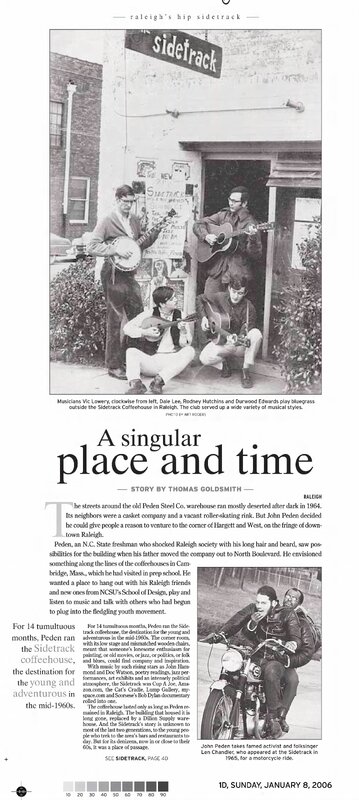
Image of John Peden, owner of the Sidetrack, and folksinger Len Chandler out for a motorcycle ride in Raleigh. The photograph captures a moment within the city’s emerging counterculture and folk‑music scene in 1965.
Newspaper feature page published on January 8, 2006, examining the history and cultural impact of The Sidetrack Coffeehouse in Raleigh, North Carolina. The article traces the venue’s brief but influential run from 1964 to 1965 and highlights its role as a center for folk music, bluegrass, poetry, political discussion, and emerging counterculture. Additional sections discuss the social climate of the era, notable performers, and the legacy of the coffeehouse after its closure.
Photograph by Warren Uzzle of the Raleigh Times showing pianist Alvin Headon performing on stage at The Sidetrack Coffeehouse on January 6, 1965. Documenting its intimate performance setting and the musicians who contributed to its mid‑1960s cultural activity.
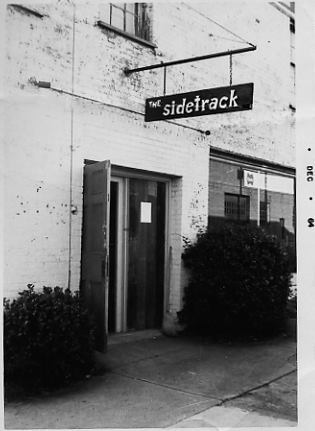
Photograph showing musicians performing bluegrass outside The Sidetrack Coffeehouse in Raleigh, North Carolina. The image features a small group playing banjo and guitar beneath the coffeehouse’s exterior sign.
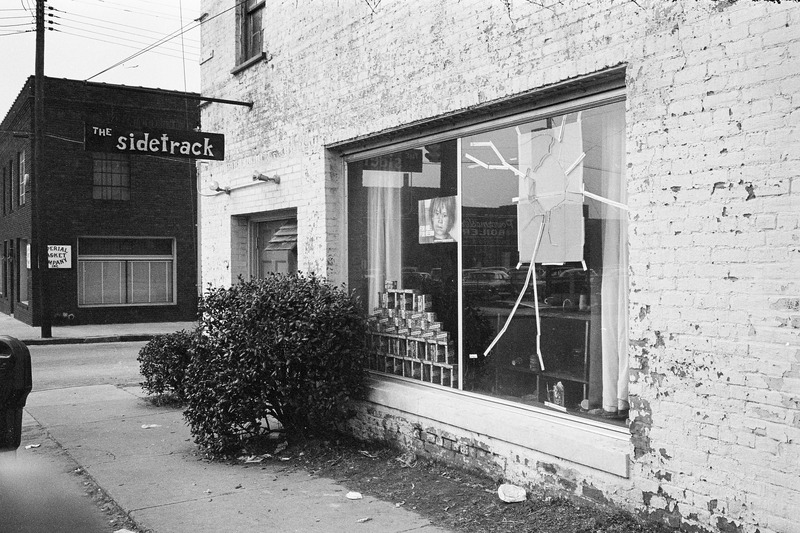
Image of an incident at Raleigh’s first coffeehouse, The Sidetrack, located at 130 South West Street. On March 6, 1965, a smoke bomb was thrown through the café’s plate‑glass front window at approximately 7:30 p.m. The device landed near an employee and detonated, filling the interior with thick, sulphureous smoke. The event underscored the social tensions surrounding the Beat‑influenced venue during its brief period of operation.
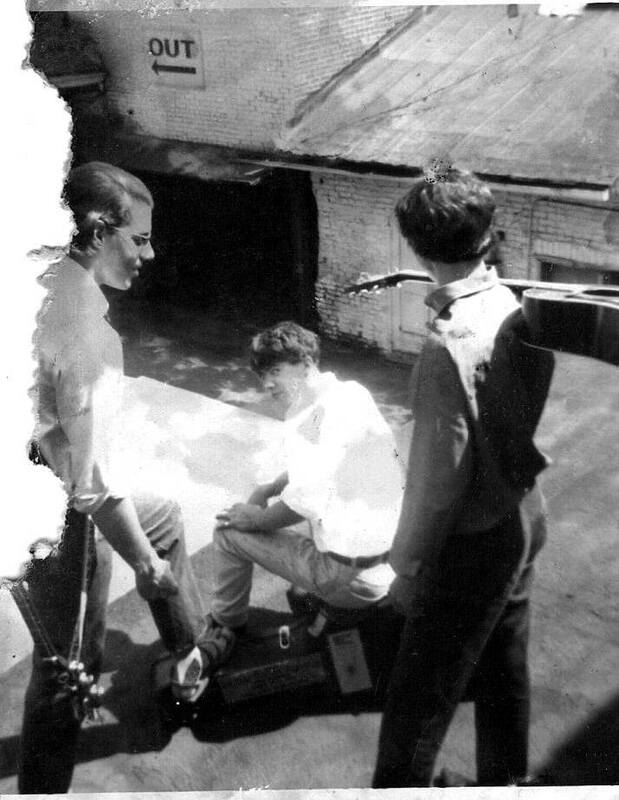
Informal snapshot taken in the summer of 1964 behind the building that would later become The Sidetrack Coffee House. The image depicts John Peden, Harry Stewart, and Johnny Snakenberg during the months leading up to the venue’s opening on December 1, 1964.
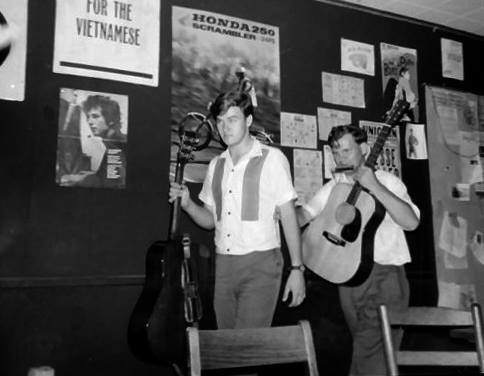
Photograph showing Merle Watson leading his father, Doc Watson, to the stage at The Sidetrack coffeehouse in the summer of 1965. The Watsons were frequent and popular performers at the venue, drawing enthusiastic audiences. The interior walls of the coffeehouse featured posters and signage related to contemporary folk musicians and counterculture figures, including Bob Dylan.
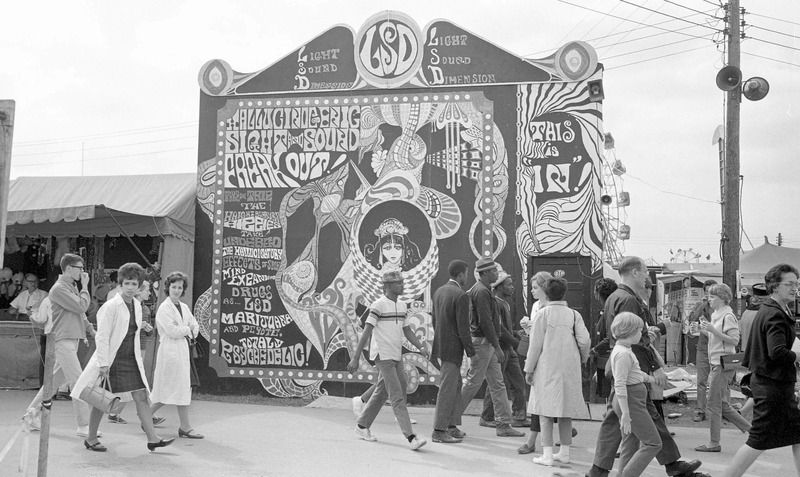
Photograph documenting the Psychedelic Chamber booth at the North Carolina State Fair on 11 October 1967. The attraction consisted of a darkened chamber outfitted with a strobe light, brightly colored mylar sheets, and loud amplified music intended to simulate a “psychedelic” sensory experience. Exterior signage advertised a “hallucinogenic sight and sound freak out” and invited visitors to “take the trip the Haight-Ashbury hippies take.” Admission was fifty cents, and the booth drew significant attention from fairgoers.
A video by creator Hitch Hiking Yeti documenting a return visit to Love Valley, North Carolina, a small, purpose‑built Old West–themed town known for its horse‑only main street and preserved frontier aesthetic. The video recounts the town’s history, including the 1970 Love Valley rock festival and reflects on the event’s lasting impact on the community.
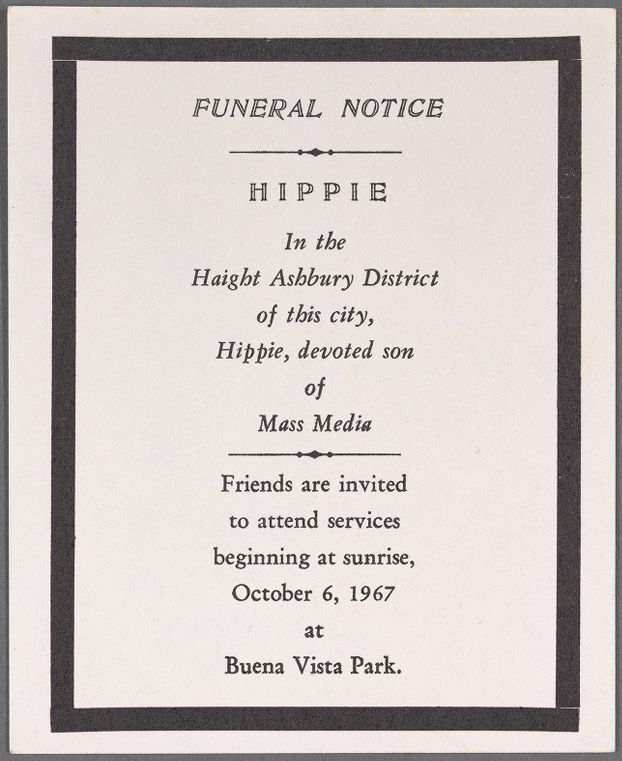
Handbill promoting "Death of a Hippie", a mock funeral staged in Haight-Ashbury. Organized by Peter Berg and The Diggers, the event was a critique of the commercialization and decline of the district's counterculture. The procession symbolically marked the perceived end of the idealized "hippie" era in the Haight,
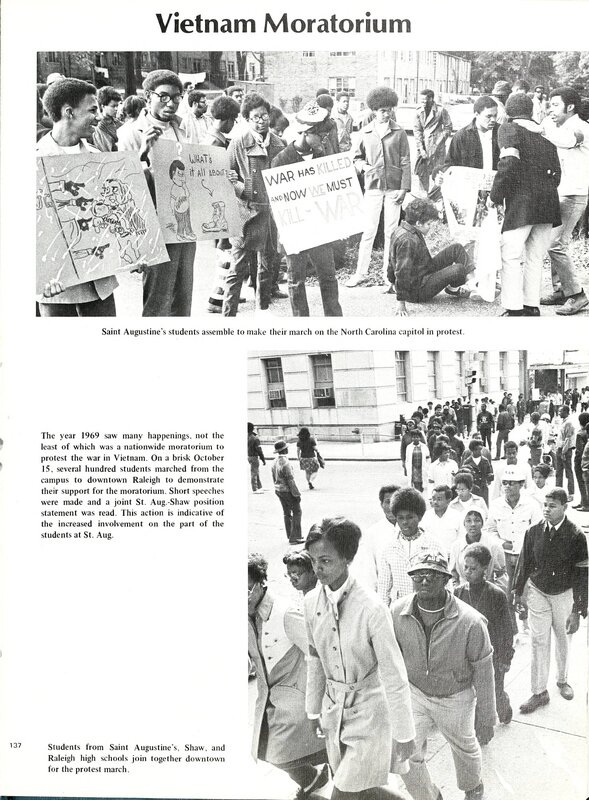
In October 1969, students from St Augustine's. Shaw and Raleigh high schools joined together to march on the North Carolina capital in protest of the Vietnam War.
Oral History interview Jack O'Connor about his experiences at the 1970 Love Valley Rock Festival. Jack, a North Carolina native, describes the festival's chaotic atmosphere, including large crowds, biker security, and drug use. He estimates the attendance at around 100,000. Jack recalls the festival's impact on the local community, including the presence of notable bands like the Allman Brothers and the involvement of local businesses. Post-festival, a hippie community formed, supported by the Balloon Works, which revolutionized hot air balloon manufacturing. Jack reflects on the broader cultural impact of the 1960s counterculture movement in North Carolina.
Oral HIstory interview Beverly Cratch. Beverly, 74, recounts her journey from Raleigh to East Carolina University (ECU) at 17, needing a fake ID to enter bars. She discusses the cultural impact of events like the Kennedy assassination, Vietnam, and civil rights, and her involvement in the first Earth Day at ECU in 1970. Beverly's background in special education and her work in starting the first hospice in eastern North Carolina reflect her commitment to social causes. She emphasizes the importance of music, environment, and healthcare in her life. They discussed the counterculture movement in Greenville, North Carolina, during the late 1960s and early 1970s. Beverly recounted attending the Love Valley festival in 1970, where she experienced the euphoria of the event. She estimated the crowd size to be over 100,000. Beverly also mentioned the lack of media attention and documentation, noting that a planned documentary was never released. They discussed the influence of the counterculture on local nightlife and the tolerance learned from interactions with military personnel and protesters.
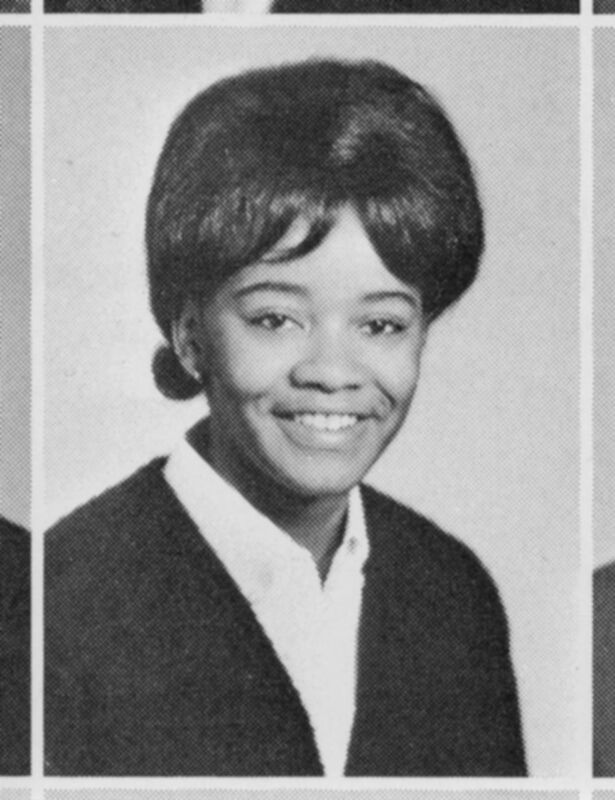
The first African American student was admitted to East Carolina College undergraduate program in 1962. Laura Marie Leary, selected by Leo Jenkins, enrolled that year and went on to graduate in 1966 with a BS in Business Administration—becoming the college's first African American undergraduate graduate.
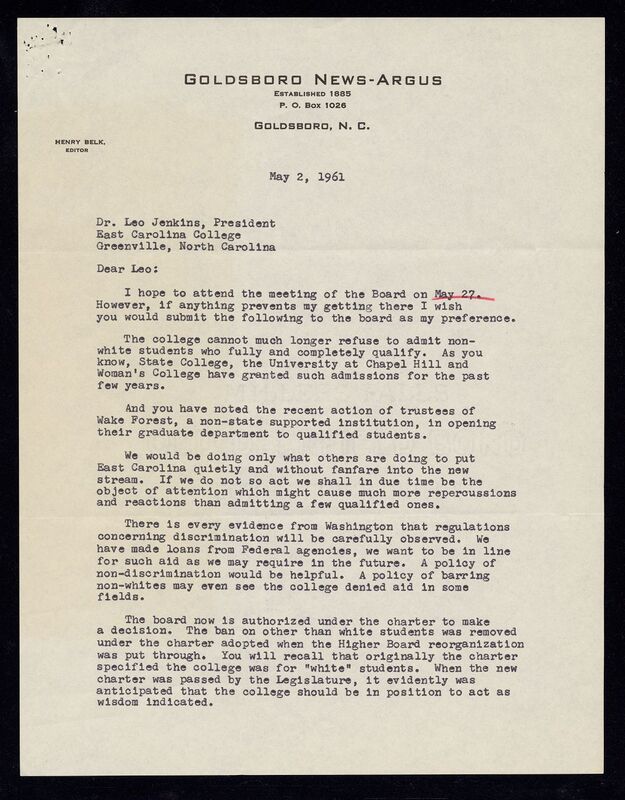
Trustee Henry Belk, editor of the Goldsboro News-Argus and civic leader, writes to President Leo Jenkins urging East Carolina College to begin admitting Black students. He notes that other state institutions had already moved toward integration and warns that maintaining a segregated admissions policy could jeopardize future federal funding.
Article in Fountainhead recounting student activity during the first Earth Day. Photo in article features oral history narrator, Beverly Whitley Cratch.
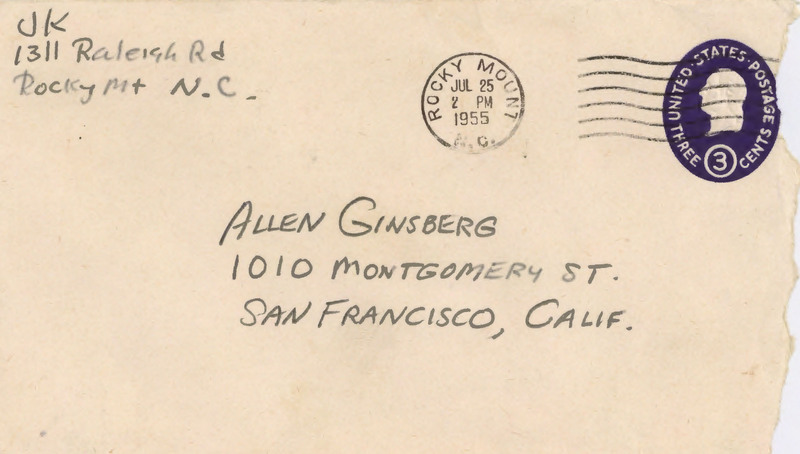
A letter written to Allen Ginsberg while Kerouac was staying with family in Rocky Mount, NC during the summer of 1955. In it he outlines his plan to travel to San Fransico by way of New Orleans and describes picking up short-term work his brother-in-law Paul Blake's TV repair shop to earn money for the trip.
A letter written to Allen Ginsberg while Kerouac was staying with family in Kinston, NC. Kerouac reflects on his ongoing revisions to "On the Road" during the summer he spent in North Carolina.
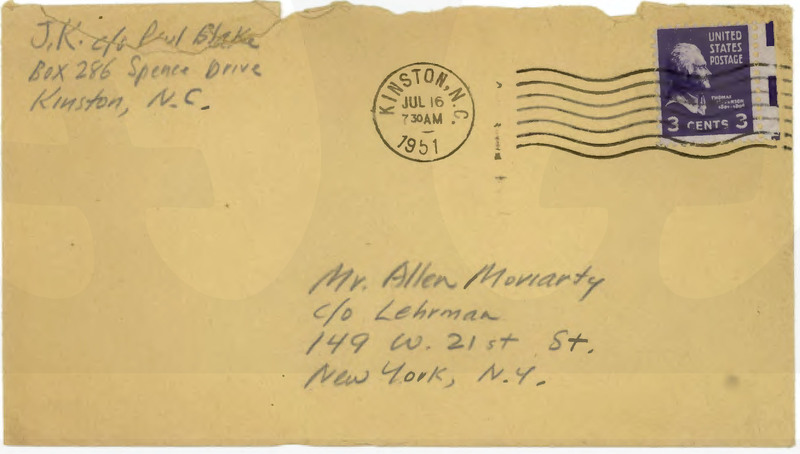
Envelope postmarked "Kinston, NC July 16, 1951, 730AM" addressed to Mr. Allen "Moriarty" (Ginsberg) from Kerouac. The use of "Moriarty" in place of Ginsberg's name is likely a playful nod to Dean Moriarty, the "On the Road" character based on their mutual friend Neal Cassady.
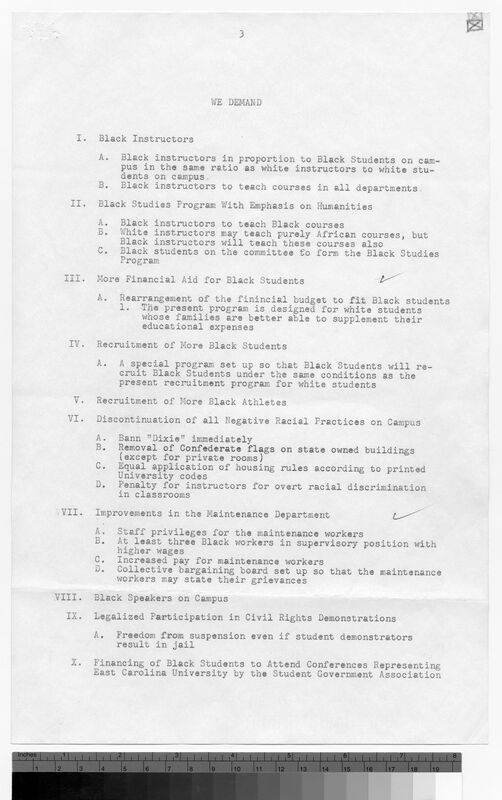
African American East Carolina University students presented this list of ten demands on March 3, 1969, to President Leo Jenkins and to the administrative body of the university. Includes sixty-seven signatures.