Wealth
Intro Paragraph
Gold
Of all of the categories of symbols contained within a Vanitas painting, wealth is likely the easiest to identify. Such objects are designed to be eye-catching and gaudy to better draw viewers in. In pieces such as Jan Miense Molenar’s 1633 work, Allegory of Vanity, fine gold details pop from the surface, catching and reflecting light. Golden strands weave throughout the entire painting, most prominently in the young woman’s hair and along the hemline of her dress. Several gold objects demand attention from where they have been placed on the table next to the woman, including a jewelry box overflowing with gold and pearl necklaces. The woman’s gold slippers peek from beneath the draping cloth of her dress, one resting atop a skull, the other being toyed with by an equally gold-clad monkey. Gold details also feature in the background of the painting, as the empty chair against the back wall of the room is adorned with gold studs and other gold detailing, lending a sense of deeply-woven wealth into the scene; the display of such possessions is not intended to be a façade, but rather an indication of true wealth.
In Vanitas Still Life (1662) by Edward Collier, gold plays a significantly different part. The entire painting is cast with a brown hue, which mutes the piece but also provides a warm, richness, and depth. Even still, wealth is noticeably present; a gold ring and a strand of delicate pearls rest next to several coins. An ornate tazza rests on its side next to a similarly overturned glass bottle, both of which denote wealth, as such items belonged to the realm of luxury. Additionally, a glass pitcher appears at the back of the table, nearly hidden amongst the clutter and so transparent that it is in danger of disappearing altogether.
Similarly, Adriaen van Utrecht’s 1642 piece, Still Life with Bouquet and Skull, displays several objects of wealth. Once again, a string of pearls dangles off of the edge of the table, glass and gold dishes adorn the table, and several coins are strewn in a small pile. A gold ring sits atop the closed book at the forefront of the piece. The bouquet of fresh flowers rests in a glass vase, which would be almost invisible if not for the reflection of light on its surface.
Willem Claesz Heda’s Still Life with Oysters, a Silver Tazza, and Glassware (1635) also showcases items of wealth, though in far more muted tones. Gold is nowhere to be found, except in the pop of color that is the half-peeled lemon at the center. Instead, Heda employs darker tones of cool brown and silver. The polished silver plates and tazza along with the reflective glass vessels, one of which is overturned and shattered, stand out in stark comparison to the subdued background. At the very far right of the painting stands yet another glass pitcher, or possibly simply the faint suggestion of one, visible only from the fine mirroring of light along its curved edges.
Wealth in seventeenth century Dutch culture was a convoluted topic. On one hand, the Dutch Golden Age and the Age of Exploration had delivered the upper classes to the height of luxury. On the other hand, Calvinism had taken full root, painting wealth and its consumption as morally sinful. “Terrible vices, including most of the seven deadly sins, were implicated in it: gluttony, lust, avarice, malice, anger, greed, vanity, sloth, pride. Only a thin line separated the noble patron of the arts from the vain, prideful self-aggrandizer” (de Vries, 1999, p. 73). Thus, the depiction of such objects in art was equally fraught with anxiety. Art had long been used to “enhance the importance of a chapel, a donor, a patron, or a festival, but never that of the artist” (Huizinga, 1924, p. 237) by showcasing the subject’s wealth and power, often through clothing, jewelry, and other expensive props. On the surface, the Vanitas genre seemingly followed the same path. Further analysis of each of the other categories of symbols, however, casts these displays of wealth in a cautionary tone.
Coins
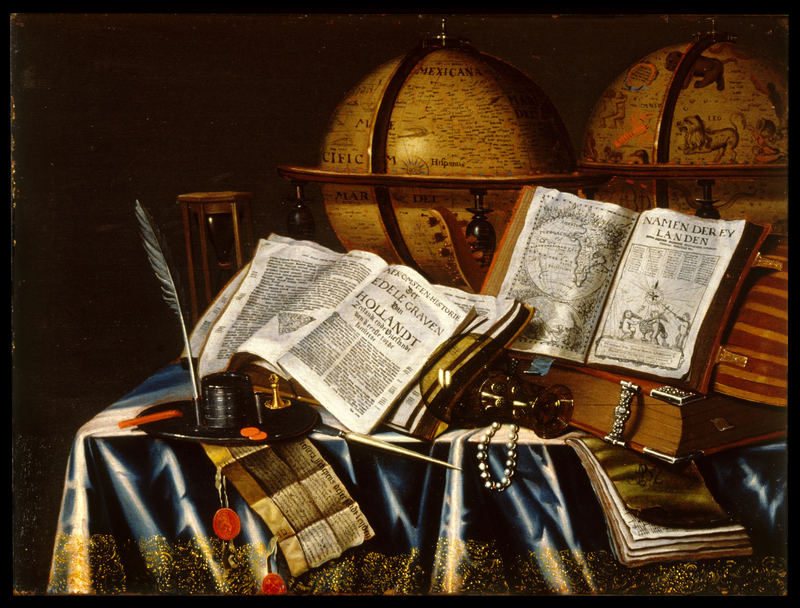
Dishes
-
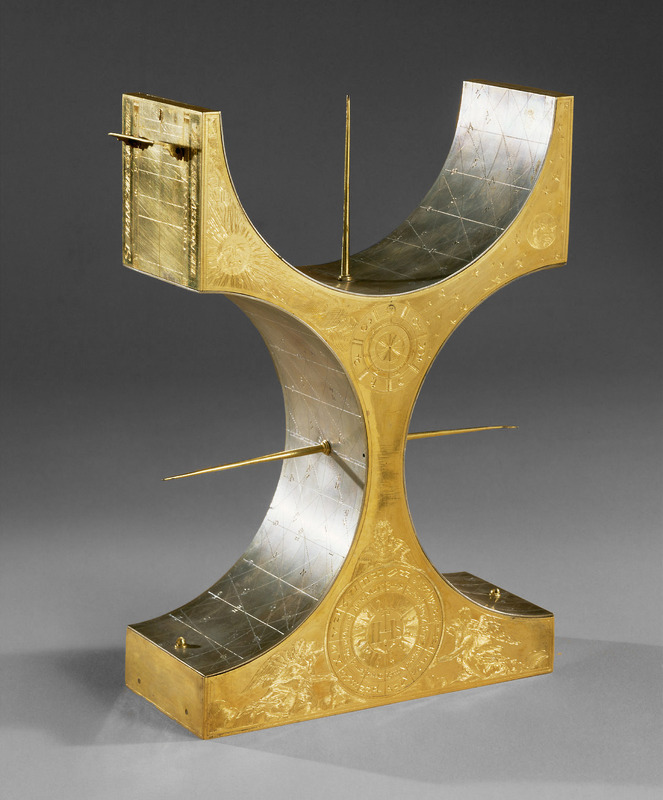 Polyhedral Equatorial SundialWolfgang Mayr
 -

-
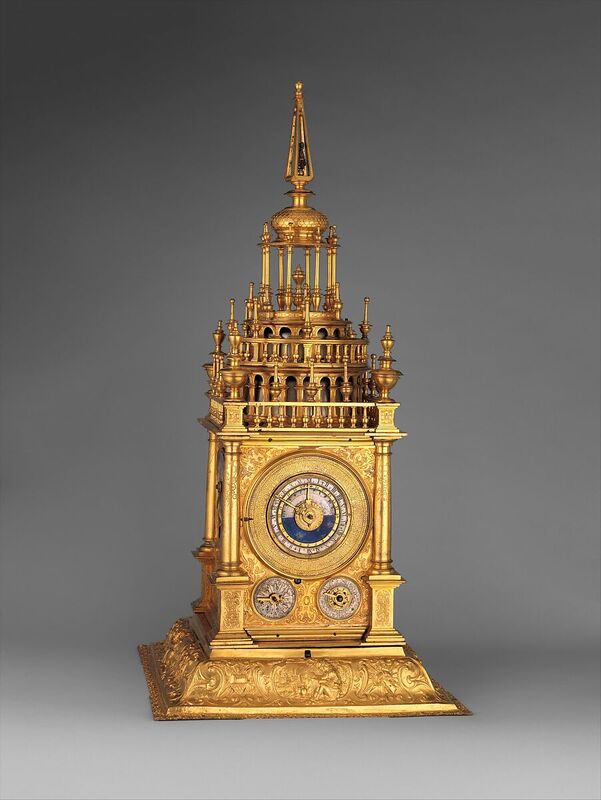
-
 Automaton clock in the form of Urania, Muse of AstronomyPaullus Schiller