Pleasure
The appearance of food in Vanitas paintings bridges the gap between material wealth and the inevitability of death and decay. The depiction of such lavish food items were hardly realistic for the time; Hecht says, of Dou’s 1652 Kitchen-maid, “the combination of this kitchen-maid with fish, flesh and fowl does not seem to be a realistic one, referring to some forgotten recipe, but rather one that was arranged to more or less plausibly show off an indeed incredible technique in portraying feathers and scales and fur” (86). The paintings were not intended to reveal the realities of Dutch and Flemish life; they were a show of both wealth, in the case of the commissioner or patron, and artistic talent. In addition to the advancements in art techniques that such grand scenes showcase, the richness of the food also reveals much of the desires, anxieties, and uncertainties of the culture. “Its message is to warn us that wealth, power, fame, and in particular all the fine goods of the world that signify and embody those things will perish before the onslaught of death,” writes Honig (169) of the Vanitas themes. Indeed, it is difficult to miss the moral and mortal overtones of skulls tucked amid decaying flowers and extinguished, smoking candles. The emergence of new religious anxieties, spurred by the Reformation, sparked uncertainty about the destination of one’s soul after death and the worth of worldly goods. In the Netherlands, an incredibly wealthy country and one where Calvinism had taken root, these fears were amplified and documented in ink and paint.
Honig goes on, however, to emphasize the special role of food in a more social, shared aspect. The symbolism of the food in these paintings, she argues, does not lie in its material wealth or commodification. Instead, the presence of a meal “invites us gradually to consider a whole range of presences: the hands that made the pie and those that cut it; the gestures that crafted the silver cup and the one that tipped it over” (Honig 174). While food assuredly represented the wealth of the culture, depictions of meals have long been used to symbolize community. By showing oranges half-peeled, pies cut and half-eaten, and wine goblets spilled, Vanitas painters showed the “relative loosening of group formations in favor of a greater degree of individualism and personal autonomy, as occurred in most economically advanced urban centers in early modern Europe” (Honig 175).
Thus, the multi-faceted nature of food in Vanitas paintings is partially revealed. It is widely accepted that a Vanitas painting reveals the mortality of the soul, the inevitability of death, and the vanity of earthly pleasures through the symbols it contains. Food, however, takes on an additional role within the artwork; one of fellowship and the breakdown of shared values within Dutch and Flemish culture.
-
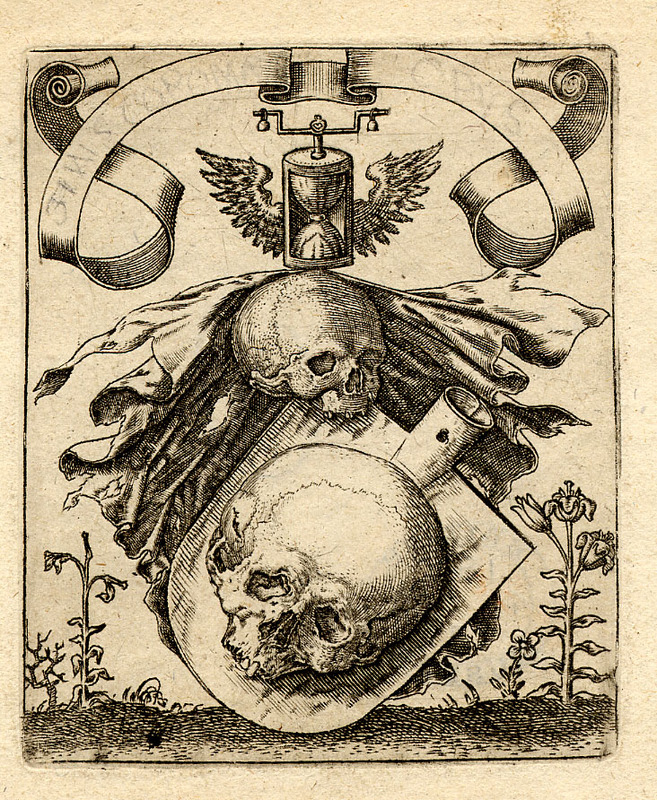 Book illustrationTheodoor de Bry
 -
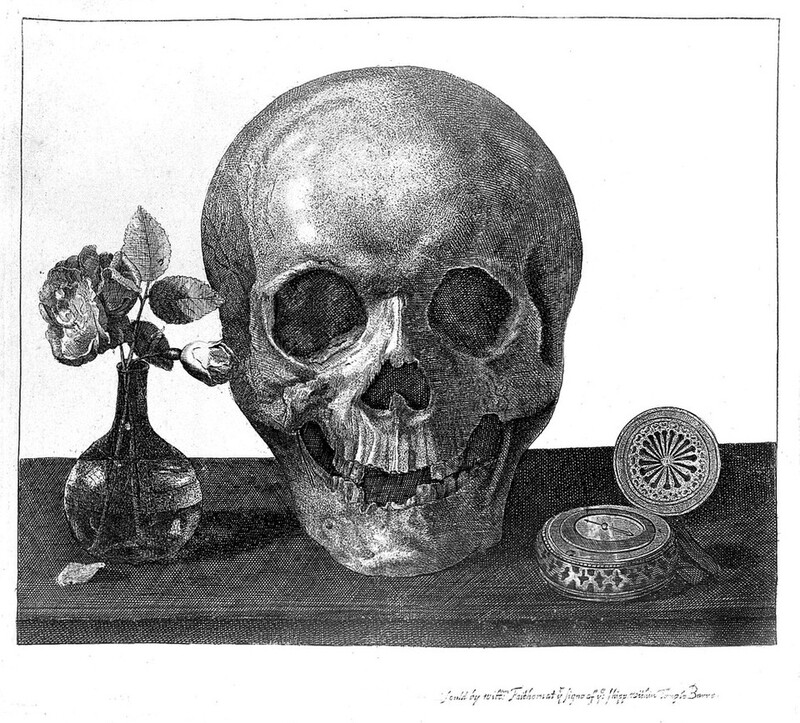 A Skull with a Timepiece and FlowersWilliam Faithorne
 -
 A Bouquet of FlowersClara Peeters
 -
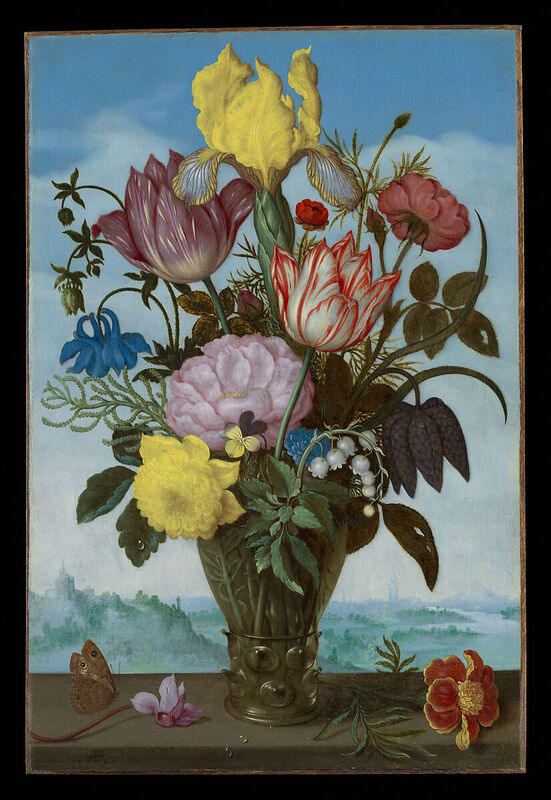 Bouquet of Flowers in a RoemerAmbrosius Bosschaert the Elder