Knowledge
Intro Paragraph
Globes
The Reformation was a complex time for the advancement of knowledge. Throughout the Middle Ages, the philosophical thought of Aristotle and Aquinas dominated universities. Martin Luther and John Calvin, however, pushed aside philosophy in favor of returning to the Bible as the source of knowledge (Lindberg, 2021). Shortly after, the Scientific Revolution swept across Europe, advancing the fields of mathematics, astronomy, physics, chemistry, and biology at an unprecedented rate. At the same time, the Dutch Age of Exploration both necessitated and provided better quality maps and tools of navigation, the science and technology for which was provided by advancements in understanding of astronomy and geodesy. The two opposing forces acted to pluralize society.
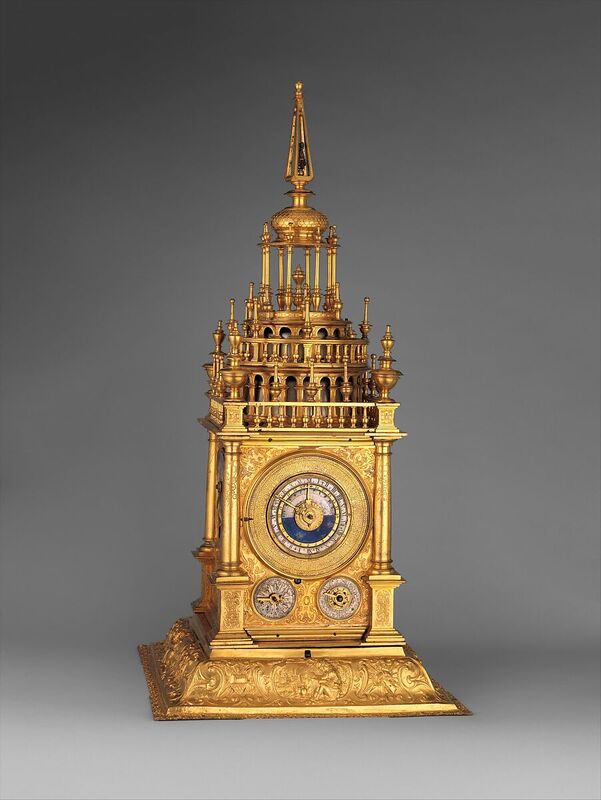
Molenaer’s Allegory of Vanity places navigation and exploration in focus by framing two of the figures—the young woman and her elderly attendant—with a tapestry map hanging on the wall behind them. This detail identifies the young woman as Lady World, “the seductive embodiment of worldliness… typically depicted… with a globe or orb on her head and holding either a mirror or a bubble” (Allegory of Vanity, n.d.). Similarly, Collier depicts worldliness and knowledge through a globe, set behind the majority of the scene, as well as several books, flayed open and well-read, to augment the globe. A timepiece is placed on the table, indicative of the technological advancements of the Scientific Revolution. Utrecht’s symbol for knowledge appears in the form of a closed book and a gold timepiece, while Heda presented knowledge as a piece of paper, torn from a book and rolled into a cone to hold spices, an important European import.
Dutch society during the Golden Age enjoyed a period of “enormous book production and [a] high degree of literacy” (de Jongh, 1998, p. 183). Thus, the inclusion of books and other texts in still life paintings would have given them an air of familiarity, but Svetlana Alpers (as cited in de Jongh, 1998, p. 183) argues that “words and texts in paintings, rather than supplying underlying meanings, above all give us more to look at… they are eyecatchers which extend without deepening the reference of the work.” In this way, an open book would act as an invitation for viewers to inspect the work more closely.
Watches
Books
Quills
-
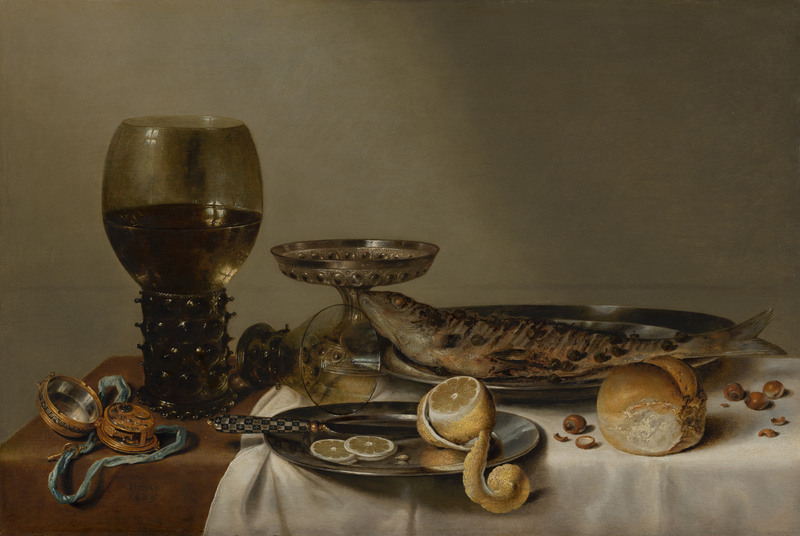 Still life with a Roemer and WatchWillem Claesz. Heda
 -
-
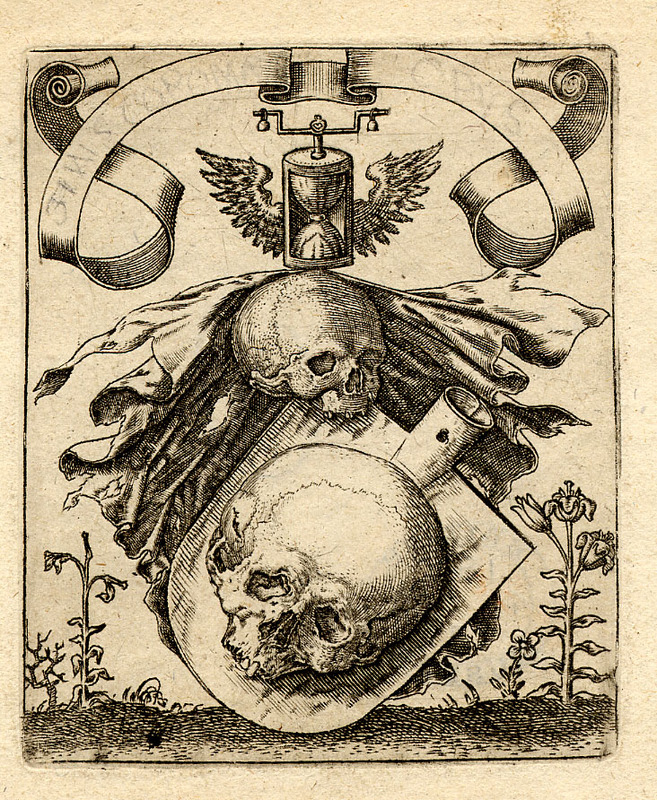 Book illustrationTheodoor de Bry
 -
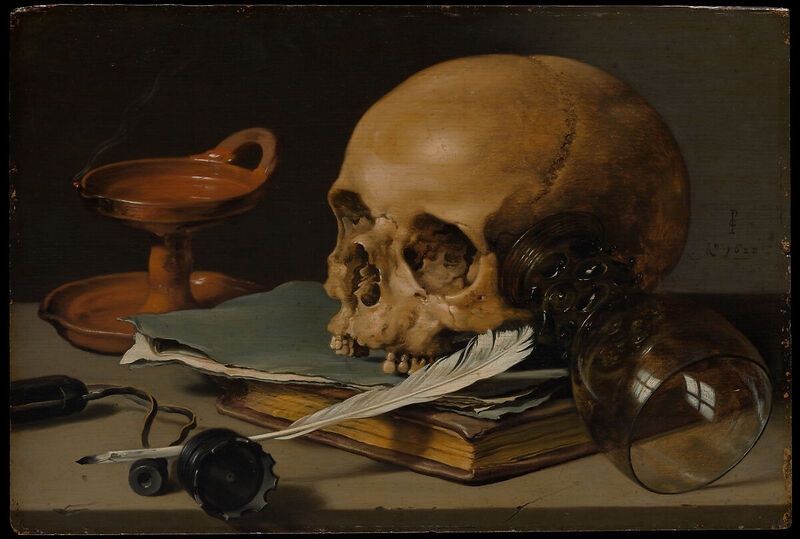 Still Life with a Skull and a Writing QuillPieter Claesz