Indo-Scythian Coin
Item
-
Title
-
Indo-Scythian Coin
-
Description
-
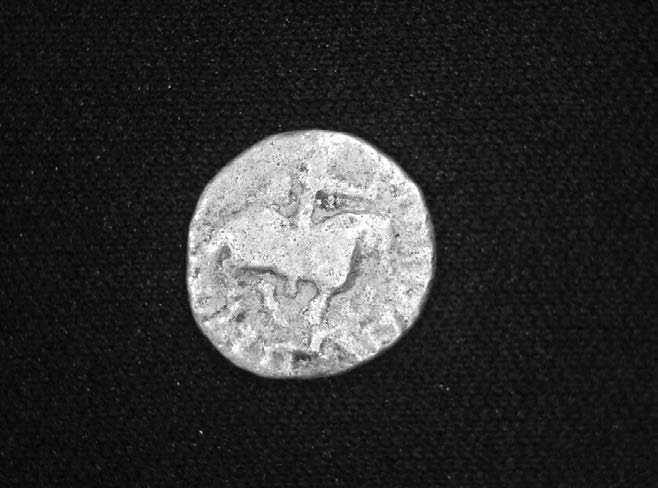
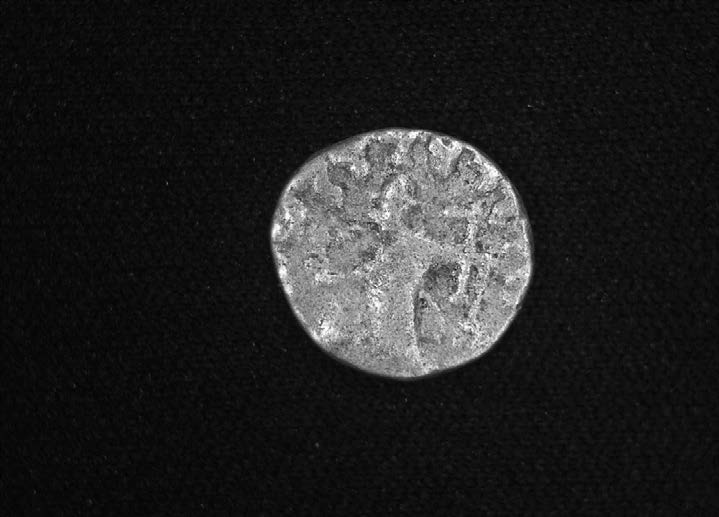
Called a "Drachm" for its size and weight, this coin is from the reign of Azes II, dated from 35 BCE - 5 CE.
Front: a King in armor, facing right, with his right arm raised and extended, holding a whip in his right hand, and mounted on a horse walking right. Kharosthi letter “ ħ” on the right beneath the horse’s head.
Writing, ΒΑΣΙΛΕΩΣ ΒΑΣΙΛΕΩΝΜΕΓΑΛΟΥ ΑΖΟΥ (Basilāōs Basilāōn Megaloi Azoi – "King of Kings Azes the Great") along the outside.
Indo-Scythian rulers were descendants of the Sakas or Scythian nomadic warriors of antiquity and are considered to have eliminated the Greco-Bactrian presence in India. Azes II ruled a kingdom which incorporated parts of modern Afghanistan and Pakistan and was believed to have been centered in what is now Kashmir. Azes II is described as a descendant of Alexander the Great and was, himself, ascribed the appellation “Great”. He was a renowned traveler, explorer, and warrior. His coins were the among the earliest bilingual coins ever minted and continued to be produced twenty-five years after his death. Much of his coinage was minted just before, during the early years of, and remained in circulation throughout, the period of Christ’s life. Some believe Azes II was one of the “three Magi from the East” in the biblical account of Christ’s birth. It is somewhat more certain that St. Thomas the Apostle traveled to India after the Crucifixion, was welcomed into the court of Azes’s successor, Indo-Parthian King Gondopharnes, and founded the Christian Church in India.
-
Identifier
-
2008.036.027
-
Source
-
Western Asia
-
Subject
-
Numismatics
-
Provenance
-
William and Catherine Sell
-
Date Created
-
35-5 CE
-
Is Part Of
-
Graveyard of the Atlantic Museum