German Silver Coin
Item
-
Title
-
German Silver Coin
-
Description
-
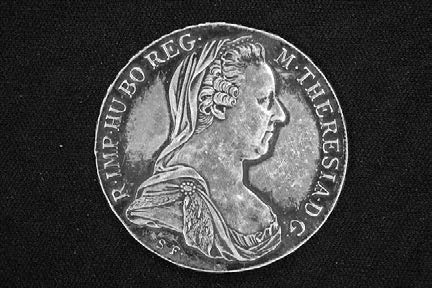
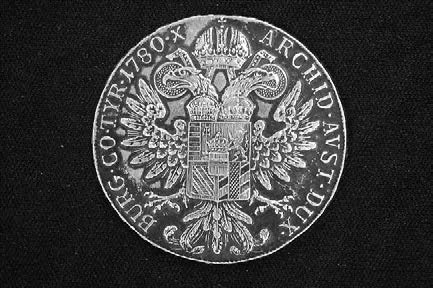
Also known as a Thaler, or Taler, from the reign of Empress Maria Theresia, 1780. It is silver, and measures approximately 42 millimeters in diameter.
Front: bust of Maria Theresia, wearing tiara, facing right, S · F · signature left of center beneath bust which are the initials of two Günzburg mint officials, Tobias Schöbl (S) and Joseph Faby (F). Legend: R· IMP · HU · BO · REG · M · THERESIA · D · G· Romanarum Imperator Hungariae Bohemiaeque Regina Maria Theresia Dei Gratia. Meaning "Roman [Holy Roman] Empress Queen of Hungary and Bohemia Maria Theresia by the grace of God."
Reverse: Imperial double-headed Eagle, arms of Austria at the center surrounded by four quarters representing Hungary, Bohemia, Burgundy, and Burgau (Günzburg). Legend: BURG · CO · TYR · 1780 · Χ ARCHID · AUST · DUX · (Archiducis Austria Duxis [Ducis] Burgundia Comes [contesse] Tyrolensis 1780. Meaning "Archduchess of Austria Duchess of Burgundy Countess of Tyrol 1780."
Following the looting of Aztec and Inca riches by Spain, the booty of the conquistadors was mortgaged to Germanic bankers and large silver coins became popular. On September 21, 1753, Empress Maria Theresia (mother of Marie Antoinette) signed a coinage convention with the Prince Elector of Bavaria. This treaty fixed the silver content of every coin and the exchange ratio between the Gulden and the Thaler at two to one; a raised security edge was added to prevent clipping. The story of the Maria Theresia Thaler is unique in the history of numismatics; it is one of the most beautiful, famous, and wide spread silver coins in the world. The first Thaler was struck in 1741 and was the currency of the Empire and Austrian hereditary lands. It became the trade dollar for the world. Since 1781, the coin has been restruck with the date 1780; the last date of original issue and the year of the Empress’s death. As late as 1980, it was a defacto currency in the Middle East and northeast Africa. Restrike thalers have come from thirteen different mints from
London to Bombay. Noting the pearls around the brooch, the small cross after the date, and the sharp edge and crisp definition of the security legend, this specimen may be dated to the 1920’s.
-
Identifier
-
2008.036.015
-
Source
-
Germany
-
Subject
-
Numismatics
-
Provenance
-
William and Catherine Sell
-
Date Created
-
1920s CE