
The Love Valley Thing
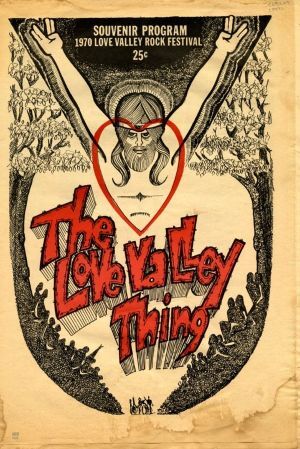
The Love Valley Thing Souvenir Program
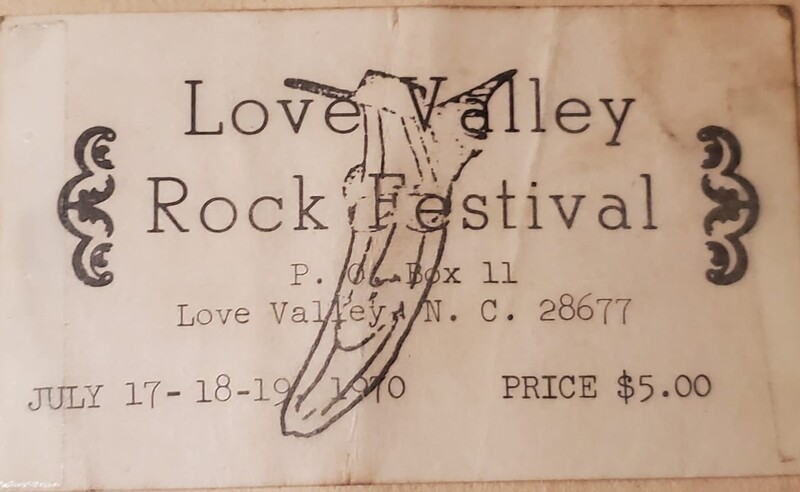
3-day Admission Ticket / Courtesy of Teresa Harris
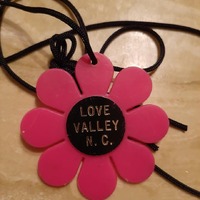
Souvenir Necklace
Courtesy of Joanna Browder Dehart
In the Carolina foothills, the Western style town of Love Valley—where cars were banned and horses filled the streets—became the unlikely site of a three day rock festival held July 17–19, 1970. The idea didn’t grow out of Woodstock envy, despite later retellings. As Tonda Barker Trivette recalled, her father, Andy Barker, simply watched news reports of wandering hippies and said, “These kids just need a place to come.” What began as a modest thought quickly expanded beyond anything the family imagined.
When a promoter suggested booking the rising Allman Brothers Band, Andy invited them to visit. The band urged the Barkers to attend the Atlanta Pop Festival to learn how a major event worked, leaving tickets for them in Macon. What stayed with the family wasn't just notes about staging or crowd flow—it was feeling of that night when Jimi Hendrix stepped into the lights. In their recollections, that moment comes back as a kind of spark: the heat, the crowd, the sound rolling over tens of thousands of people. They drove straight back to Love Valley afterward, carrying the charge with them, convinced that if a field in Georgia could hold that kind of energy, maybe their little Western town could, too.
Over the next weeks, about 200 volunteers arrived to help construct the stage and prepare the grounds. Andy expected a few hundred attendees—maybe 500 at most. Instead, by the time the music began to drift out over the valley, an estimated 100,000 to 200,000 people had descended on a town of fewer than 100 residents. With no promotion to guide attendance—and bogus tickets everywhere—the Barkers saw only about $25,000 in returns from the enormous turnout.
For the tie dyed visitors, Love Valley’s dirt streets, saloons, and hitching posts felt like stepping into another world. Locals mingled on horseback as festivalgoers drifted between campsites and the wooden storefronts of Barker’s frontier dream. Despite the scale, the atmosphere remained peaceful. A Sunday rain turned the ground to mud, but the crowd simply played in it, adding to the weekend’s sense of Southern ease and improvisation. As Tonda remembered, the blend of cowboy culture and psychedelic sound felt surreal: “It was perfect, it was like a dream.”
For locals, the festival became a moment of cultural collision. Ranchers, teenagers, and curious families watched as the counterculture arrived in full color, transforming the quiet mountain settlement. The event revealed both the South’s unease with the era’s social changes and its fascination with them.
Unlike Woodstock or Altamont, Love Valley left behind no official record—only fading photographs, scattered recordings, newspaper clippings, and the memories of those who were there. What survives is a layered legacy: part spectacle, part cautionary tale, part local legend. With no historical marker or official archive to acknowledge what unfolded that weekend, the festival endures through recollection and retelling—a brief, vivid moment in North Carolina’s cultural history when a frontier town and the counterculture found themselves unexpectedly intertwined.

Band Line-up with Headliners The Allman Brothers Band
The Legend of the Lost Documentary
Amid the swirl of music, dust, and countercultural energy, a small film crew attempted to document the Love Valley Rock Festival. Cameras rolled from the edges of the stage, capturing everything from the Allman Brothers’ performance to the glow of campfires scattered across the hills. Alongside this professional effort, festivalgoers shot their own home movie clips—fleeting, shaky fragments that survive today as personal keepsakes and occasional bootleg snippets. For decades, these scattered bits of footage fueled the legend of the “lost Love Valley documentary,” a vanished record that only deepened the dreamlike aura surrounding the event.
The truth is stranger and more complicated than the legend. Andy Barker arranged for a professional crew to film the festival, led by art director Dale Hennessy, who had previously worked with 20th Century Fox. When the studio folded, Hennessy and his team came independently, bringing nearly twenty people who stayed at the Barker family’s hotel. They built a soundproof recording space inside a log building near the arena. Their goal wasn’t to run festival sound, but to create a high‑quality audio and film record of the event itself.
The footage was shot, but the Barkers didn’t have the money to pay the crew once the festival ended. As a result, the film was locked away. Over the years it has been sold once or twice, but the rights remained with Tonda, she still owns them today. A short five‑ to seven‑minute segment survives—used when the Allman Brothers were inducted into the Rock & Roll Hall of Fame—but the full documentary has never been edited or released.
The most recent trace suggested the reels had drifted west, supposedly stored in a vault somewhere in California. “It definitely exists,” she said, “It’s in a secret place somewhere.” The missing film has become part of Love Valley’s mythology: a real artifact that no one can see, a lost record that keeps the festival suspended between memory and legend.
A Generation Gathers at Love Valley
The sight was astonishing: a single dirt street leading to a cliff that opened into a valley suddenly filled with humanity. On the first night alone, people remembered seeing nearly 75,000 festivalgoers under the stars. Cars were everywhere—lined along the ridges, packed into the fields, pointed in every direction. The music drifted across the valley with perfect acoustics, the sky clear and bright above them. Many who were there still say they’ve never been to a concert that felt better. It was peaceful, joyful, and unmistakably Southern in its atmosphere.
They arrived in waves—piling into cars with no planning, no extra clothes, and little money. What began as a loosely imagined gathering quickly swelled into an enormous, improvised city of tents, blankets, and campfires. The festival’s spontaneity shaped the entire experience. There were no food trucks, no organized vendors, and few provisions for the tens of thousands who poured into the valley. People relied on whatever they could find and share. The Lighthouse Family bus set up a free-food kitchen to help feed the crowd, but most attendees focused on the music and the atmosphere rather than practical needs.
By Saturday morning, the scene had transformed completely. Tonda Barker Trivette recalled, “I’d never seen so many people in my life. Over 200,000—you couldn’t move. It was body to body.” The crowd spilled over the fences, climbing and walking in from every direction. There was simply no way to keep people out; the festival had taken on a life of its own.

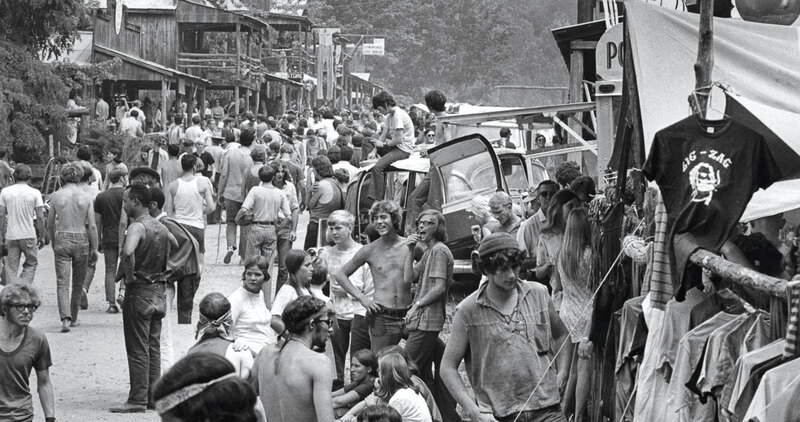


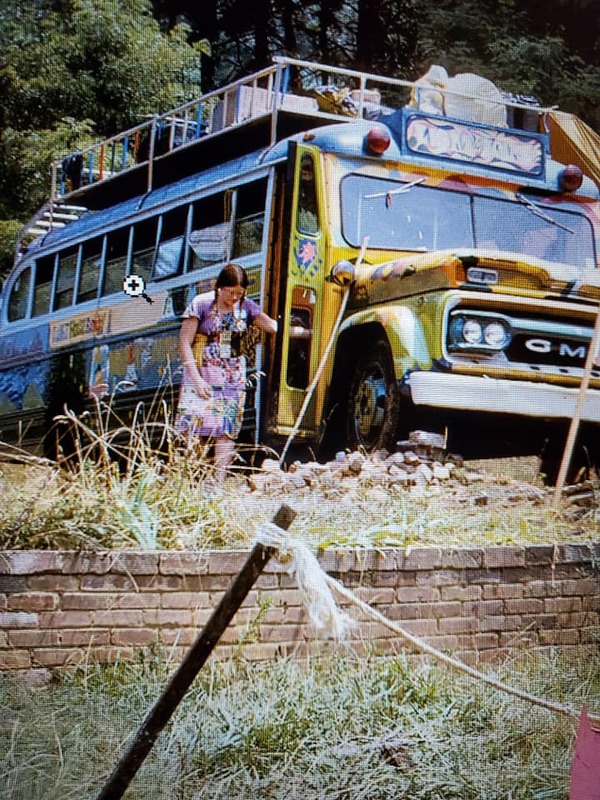

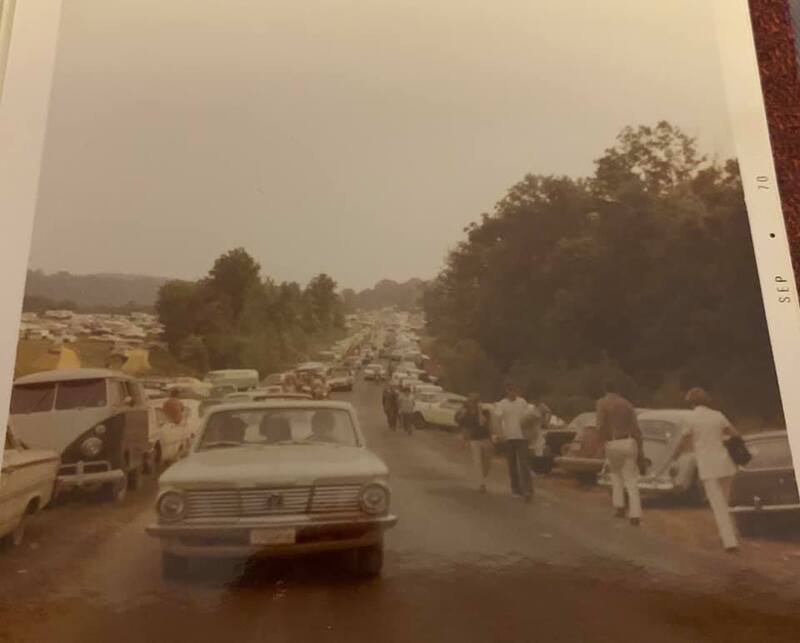
The valley itself shaped the experience. Curving into a natural bowl beneath them, its stone bleachers and terraced slopes created a ready-made gathering place for the rising tide of people. A sense of euphoria swept through the valley—an intense feeling of peace, openness, and acceptance. Homegrown marijuana circulated freely, hallucinogens appeared in small pockets, and an OD tent stood ready for those who needed help. Skinny-dipping and nudity were common, reflecting the loosened social boundaries of the era.
Observers immediately drew comparisons to Woodstock, held less than a year earlier. Love Valley’s crowd shared the same youthful energy, the same patchwork of tie-dye, denim, and bare feet. Yet the setting made it feel entirely different. Instead of rolling farmland, Love Valley offered a surreal backdrop: a hand-built Western main street with dust, wooden facades, and festivalgoers filling every corner of town. The result was a gathering that felt both familiar and utterly strange—a counterculture migration unfolding in the heart of Dixie.
If Woodstock symbolized the national counterculture at its peak, the crowd at Love Valley revealed how that movement filtered into the American South—adapted, reinterpreted, and set against a landscape of cowboy myth and rural identity. In the memories of those who stood on those hillsides, it is the crowd itself—the sheer number of people, the peacefulness, the wonder of it all—that remains the festival’s enduring heartbeat.
Word on the Street: Love Valley in the News
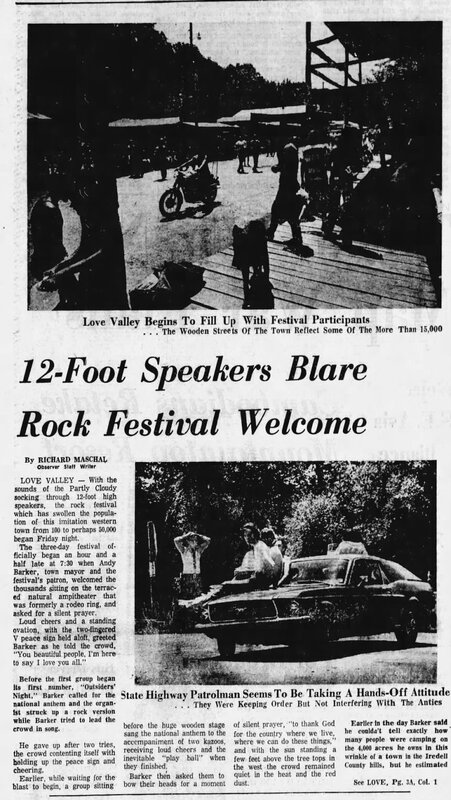
12-Foot Speakers Blare Rock Festival Welcome by Richard Maschal
North Carolina newspapers covered the 1970 Love Valley Rock Festival with a mix of curiosity, alarm, and cultural fascination. Reporters were drawn to the unlikely setting—a hand‑built Western town suddenly hosting tens of thousands of young people—and their stories reveal how the press tried to interpret a countercultural gathering unfolding in a place built for horses rather than hippies.
Early coverage framed Love Valley as a novelty, emphasizing its dirt streets, hitching posts, and the ambition to create a “Woodstock of the South.” Articles leaned into the spectacle: motorcycles crowding wooden sidewalks, campsites spreading across the hills, and the town’s founder welcoming an unexpected wave of hippies. This early coverage often adopted a tone of amused observation, treating the festival as a sociological event rather than a musical one.
Once the festival began, reporting shifted toward logistics and tension. Newspapers highlighted traffic backups stretching miles, troopers working around the clock, and volunteer security managing the crowds. Some outlets embraced sensationalism, publishing dramatic headlines about “jungle beats,” nudity, and drug use. This sensationalism contrasted sharply with more measured reporting that described the festival as peaceful, communal, and largely self‑regulated.
Together, the coverage reveals a press corps negotiating its own anxieties about youth culture, public morality, and rapid social change. The media’s portrayal of Love Valley became a mirror of the era—capturing both the South’s unease with the counterculture and its fascination with a moment that briefly transformed a quiet mountain into what one reporter called “a national stage for the young.”
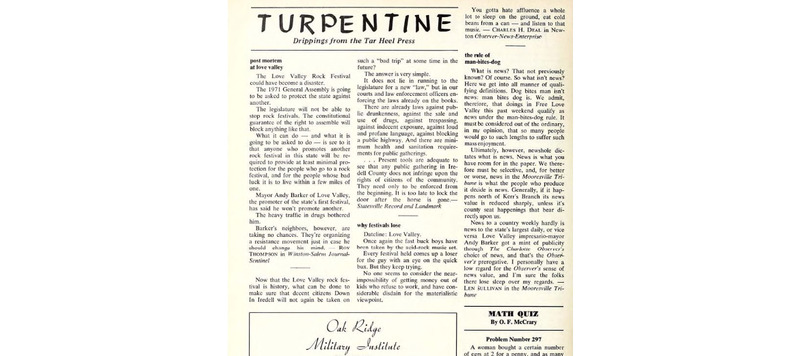


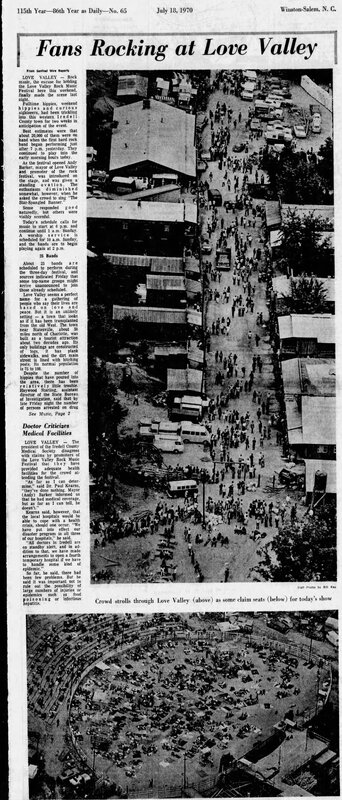

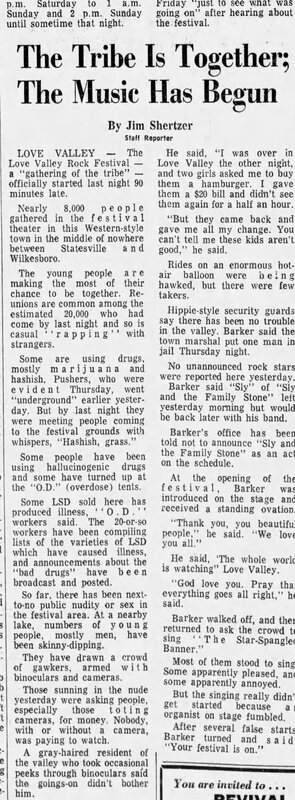
In the aftermath of the Love Valley Rock Festival, newspapers across North Carolina worked to correct the swirl of rumors that had overshadowed the event. Articles challenged early reports of violence and mass arrests, noting that many alarming claims had been overstated—“many of the stories circulating… simply did not happen.”
Editorials focused on the political fallout, from calls for new regulations to renewed debates over public morality. These retrospective accounts reveal a press corps trying to steady the narrative after days of sensational headlines.
Later reflections framed Love Valley as a cultural crossroads where Southern tradition met the national counterculture. Through articles, photographs, and editorials, the media portrayed the festival as part spectacle, part caution, part reluctant admiration—capturing a moment when North Carolina confronted rapid social change and the lingering shockwaves of Woodstock.